
Written by Patrick Mulei. Reviewed by Anthony Mule.
The Singing Wells are hand-dug water pits in the dry sand riverbeds of northern Kenya, where Samburu warriors climb down into the shaft, pass water up by hand, and sing family-specific chants that their own cattle recognise and respond to. They are not a performance staged for visitors. They are daily survival work during the dry months, and visiting one properly means understanding the etiquette before you arrive.
All rates below are for two adults travelling together in a private 4×4 Safari Land Cruiser — licensed driver-guide, fuel, full-board accommodation, park and conservancy permits, and community visit fees.
Timing is the whole thing with the wells. They only run during the dry months, and only in the morning while the herds come down to drink. If your itinerary has you arriving at a well at 2:00 PM, you will find an empty riverbed and a lot of hot sand. We build these visits into the early part of the day, on the way out of camp.
Tier | Lodges Included | Total Per Person | |
Budget | Samburu Riverside Camp | $1,240 | |
Mid-Range | Elephant Bedroom Camp | $1,790 | |
Luxury | Saruni Samburu | $2,650 | |
Luxury Plus | Sarara Camp / Sasaab (fly-in) | $4,410 |
Tier | Lodges Included | Total Per Person | |
Budget | Samburu Riverside (2N) + Comfort Gardens Ol Pejeta (1N) | $1,820 | |
Mid-Range | Elephant Bedroom Camp (2N) + Sweetwaters Serena (1N) | $2,590 | |
Luxury | Saruni Samburu (2N) + Lewa Wilderness (1N) | $3,900 | |
Luxury Plus | Sarara Camp (2N) + Sirikoi Lodge Lewa (1N), fly-in | $6,290 |
Full write-ups on those lodges sit in our Saruni Samburu review and Elephant Bedroom Camp review. The Ol Pejeta pairings run on our Samburu and Ol Pejeta combo page.
Included:
Not covered:
Nobody drills these. Warriors dig down through the dry riverbed sand by hand, sometimes several metres, until they hit the water table sitting below the surface. The shaft is narrow, and the walls are held back with branches and packed sand.
Then comes the part that surprises people. Men stand in a chain inside the shaft, one above the other, passing water up in buckets or carved troughs, and they sing while they work. The chant sets the rhythm for the handover so the line does not falter — and each family has its own melody.
The cattle wait on the bank. When a family’s song starts, their herd walks down into the trench to drink and nobody else’s does. The livestock recognise the tune. Watching a hundred animals sort themselves out by sound alone is the thing that stays with people long after the trip.
Elephants dig their own version of this along the Ewaso Nyiro River when the surface water dries up, scooping into the sand with their feet and trunks to reach the cleaner water underneath.
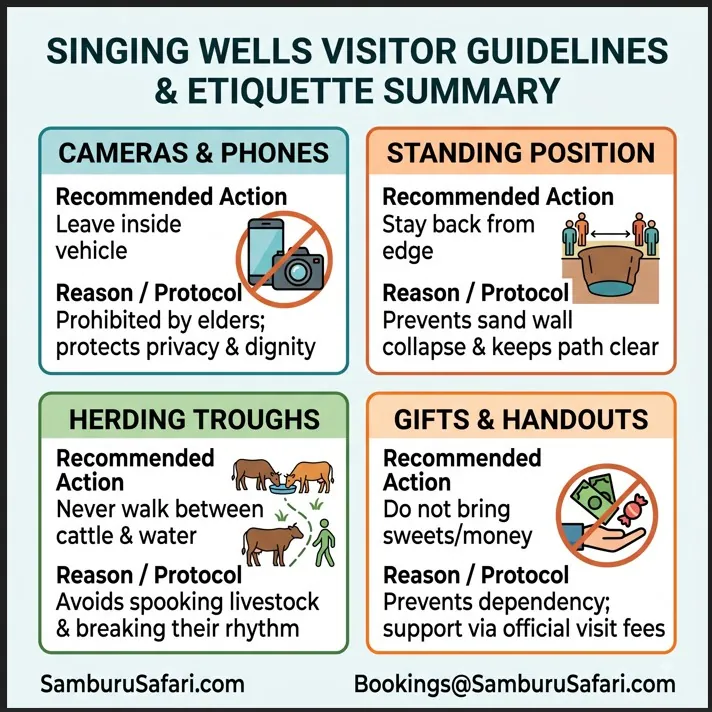
The rule at most wells is no cameras. Local elders enforce it, and it is the single most important thing to understand before you go.
The reasoning is straightforward. This is heavy physical labour that families depend on to keep their livestock alive, not a cultural show. Pointing a lens down a shaft at men working, or filming women and children at the trough, turns their morning into someone else’s content.
Some families will permit photographs if you ask first, through your guide, and if the answer is yes it is genuinely yes. But the default is no, and attempting a discreet phone shot after being told so is the fastest way to sour a visit for everyone. I ask guests to leave cameras in the Land Cruiser before we walk down. Nobody has ever regretted it.
Beyond the cameras, the etiquette is simple: stay back from the shaft edge, do not walk between the cattle and the trough, keep your voice down, and let the guide handle any conversation with the elders.
The same principle applies at village visits more generally, and it is worth reading our notes on photography ethics before any cultural stop in the north.
Singing Wells Samburu photography rules and visitor etiquette guide
Before walking down into the dry sand riverbed, it is essential to understand the ground rules that preserve the dignity of the Samburu pastoralists’ daily labor. While visiting a working well offers an authentic look into northern Kenya’s heritage, following local protocols ensures a respectful experience for both visitors and community elders. Below is a quick-reference summary of what to do and what to avoid during your visit.
Guideline | Recommended Action | Reason / Protocol |
Cameras & Phones | Leave inside vehicle | Prohibited by elders; protects privacy & dignity |
Standing Position | Stay back from edge | Prevents sand wall collapse & keeps path clear |
Herding Troughs | Never walk between cattle & water | Avoids spooking livestock & breaking their rhythm |
Gifts & Handouts | Do not bring sweets/money | Prevents dependency; support via official visit fees |
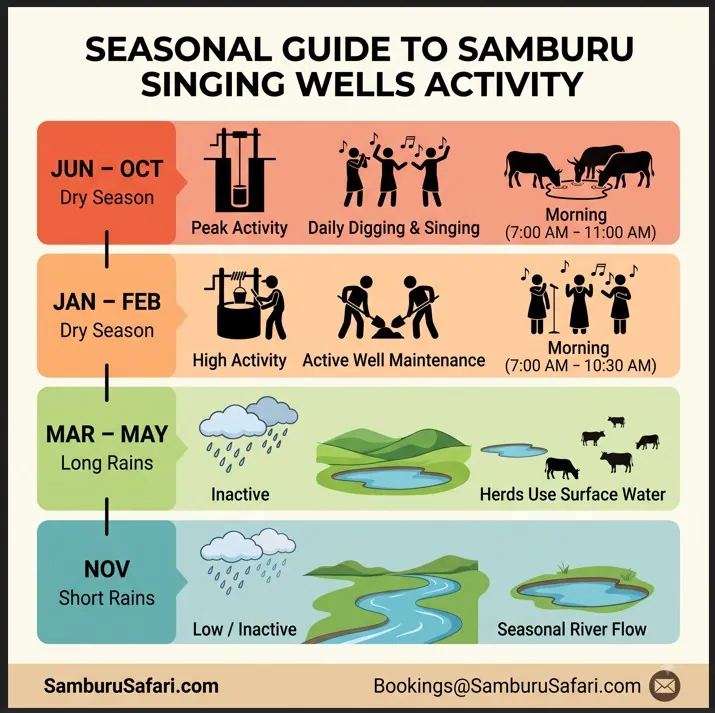
The wells are a dry-season phenomenon. When the rains come and surface water is everywhere, nobody needs to dig.
Time of day matters as much as the month. Herds are brought down in the morning, roughly between 7:00 and 11:00, depending on how far the family has walked. Afternoons are quiet. Our best time to visit Samburu guide covers how the dry season shapes everything else on your trip too.
Best time of year to visit Singing Wells Samburu Kenya
The availability and activity at the Singing Wells depend entirely on seasonal rainfall patterns across northern Kenya. During wet months, livestock drink from natural surface pans, leaving the dug wells inactive. Use this seasonal breakdown to align your safari itinerary with peak morning singing and active cattle herding times.
Season / Months | Activity Level | Best Time of Day |
Jun – Oct (Dry) | Peak Activity (Daily digging & singing) | 7:00 AM – 11:00 AM |
Jan – Feb (Dry) | High Activity (Active well maintenance) | 7:00 AM – 10:30 AM |
Mar – May (Long Rains) | Inactive (Herds use surface water) | N/A |
Nov (Short Rains) | Low / Inactive (Seasonal river flow) | N/A |
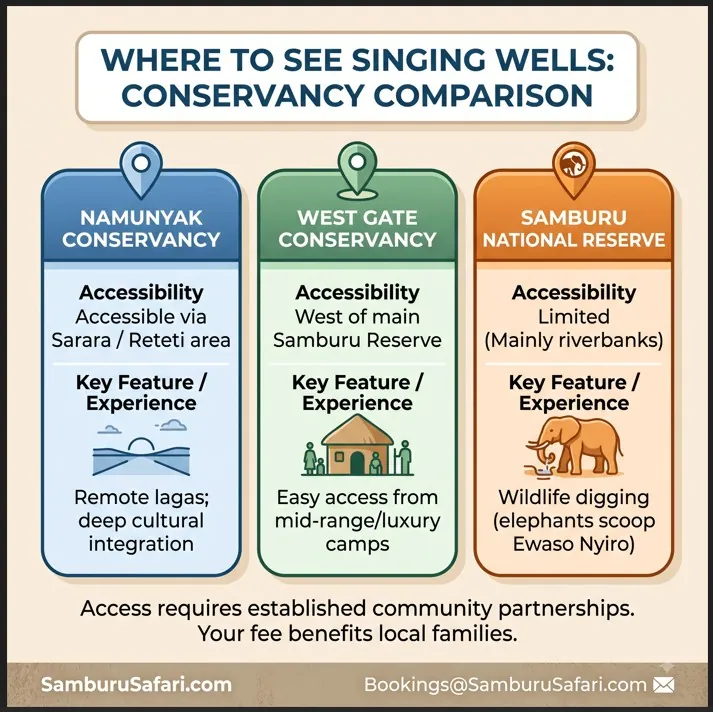
The wells are scattered through the dry riverbeds across Samburu County rather than sitting at a fixed address you can drive to.
The most reliable ones for visitors are in the community conservancies — the sandy lagas around Namunyak near Sarara, and the riverbeds inside West Gate Conservancy west of the main reserve. Both have established relationships between the camps and local families, which is what makes a respectful visit possible.
This is not something to attempt on your own. Turning up unannounced at a working well is intrusive and will not go well. Every visit should be arranged in advance through a lodge or guide who knows the family.
Where are the Singing Wells located in Samburu conservancies?
Because the Singing Wells sit in seasonal sand rivers (lagas) rather than fixed public landmarks, access requires established community partnerships. Visiting through accredited conservancies guarantees that your community fee directly benefits the local families maintaining the shafts. Here is how the primary accessible conservancy regions compare for safari planning.
Location / Conservancy | Accessibility | Key Feature / Experience |
Namunyak Conservancy | Accessible via Sarara / Reteti area | Remote lagas; deep cultural integration |
West Gate Conservancy | West of main Samburu Reserve | Easy access from mid-range/luxury camps |
Samburu National Reserve | Limited (Mainly riverbanks) | Wildlife digging (elephants scoop Ewaso Nyiro) |
It is easy to hear the chanting and assume it is ritual. It is a work rhythm and an identification system rolled together — it coordinates the bucket chain and tells the cattle whose turn it is.
Herds learn their family’s song from calfhood. Different clans use different chants, and the animals sort themselves accordingly.
Wells collapse. Sand shifts, walls give way, and the depth changes as the water table drops through the dry months. Families re-dig and maintain the same wells year after year.
Men spend hours standing in a narrow sand shaft in rising heat, passing heavy water up a human chain. Watching it for twenty minutes gives you a fair sense of what pastoral life in this country actually demands.
Elephants, Grevy’s zebra, and oryx dig or drink at these riverbeds too. Competition for water between livestock and wildlife is the central tension in northern Kenya conservation, and the conservancy model exists largely to manage it.
The contribution you pay goes directly to the family or the village committee, not to a tour operator. It is a small amount of money that matters locally, and it is why arranged visits work better than turning up.
Do not bring sweets, pens, or money for children. It creates dependency and changes how the next visitors are received. If you want to contribute beyond the visit fee, ask your guide about the community projects the conservancy actually runs.
Usually not. Most families and elders prohibit photography and video to protect the dignity of what is daily work. Some will grant permission if asked in advance through your guide, but never assume it.
The dry months — June to October and January to February — in the morning, when herds are brought down to drink. During the rains the wells are largely unused.
In dry sand riverbeds across Samburu County. The most accessible for visitors are in Namunyak and West Gate conservancies, arranged through local camps and guides.
Standing quietly at the edge of a dry riverbed listening to a family’s chant carry off the sand, then watching their cattle walk down on cue, is one of the few genuinely unstaged cultural experiences left on this circuit. Browse the full range across our Samburu safari packages, or talk to our team about timing your visit for the dry season.
Visit protocols, seasonal timing, and community arrangements checked on the ground by our guides. Last updated July 2026.
Message us directly for custom itineraries and the latest seasonal offers.