
Written by Patrick Mulei. Reviewed by Anthony Mule.
Quick Answer: West Gate Conservancy is a 36,600-hectare community-owned wildlife sanctuary directly west of Samburu National Reserve along the Ewaso Nyiro River. Managed in partnership with the Northern Rangelands Trust, it protects endangered wildlife like the Grevy’s zebra while permitting activities banned inside the national reserve — night game drives, guided bush walks, and camel tracking.
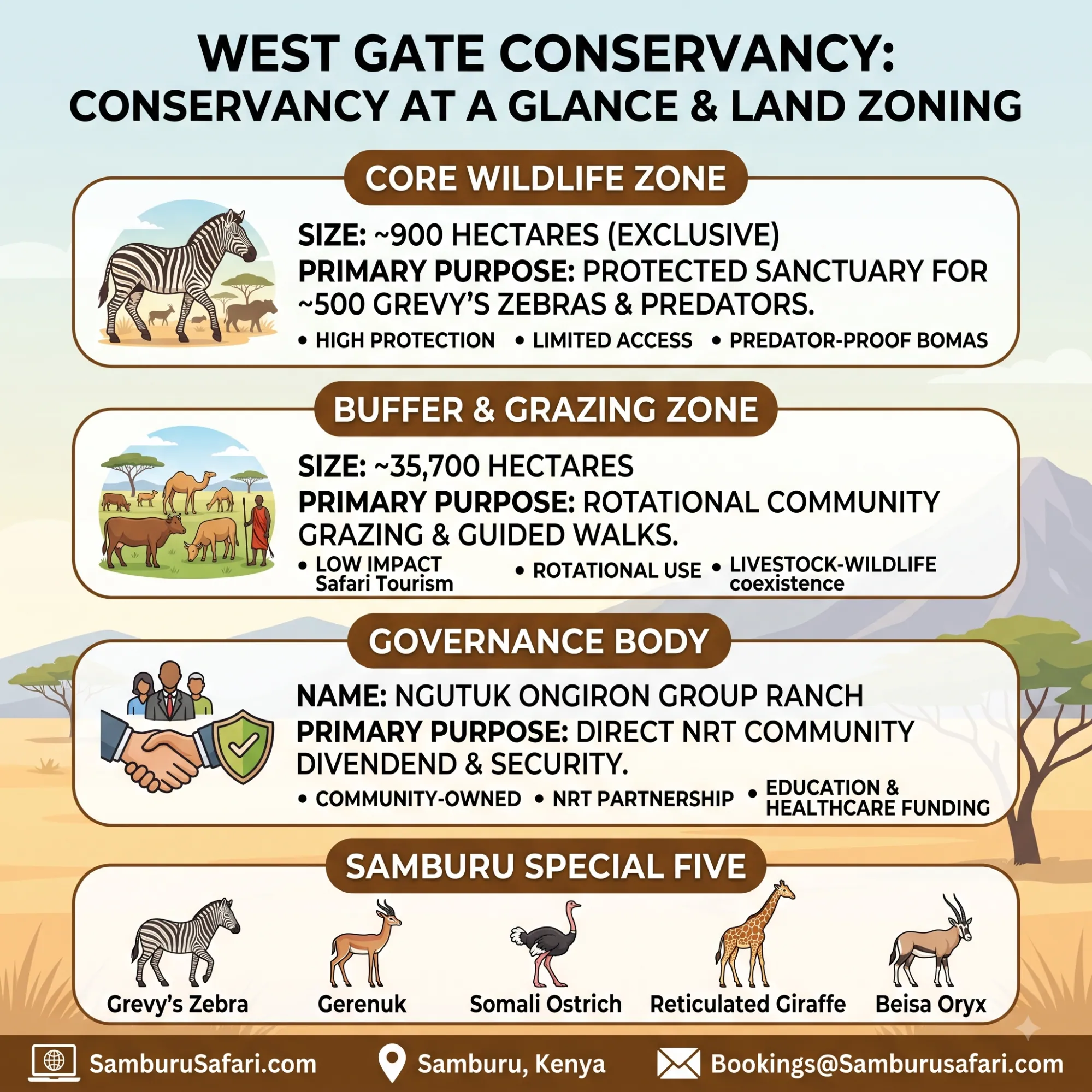
While West Gate Conservancy spans 36,600 hectares, its land is strictly managed through functional zoning to balance livestock pastoralism with wildlife protection. The conservancy is owned by the Ngutuk Ongiron community and forms a crucial migratory corridor between Laikipia and the Mathews Range. Understanding this structure highlights why low-impact safari tourism directly preserves local ecosystems.
Zone / Metric | Land Size & Details | Primary Purpose |
Core Wildlife Zone | ~900 Hectares (Exclusive) | Protected sanctuary for ~500 Grevy’s zebras & predators. |
Buffer & Grazing Zone | ~35,700 Hectares | Rotational community grazing & guided walks. |
Governance Body | Ngutuk Ongiron Group Ranch | Direct NRT community dividend & security. |
All packages are customisable and calculated for two adults travelling together in a private 4×4 Safari Land Cruiser, with an expert driver-guide, fuel, accommodation, and all park and conservancy entry fees.
Tier | Lodge / Camp | Total Cost Per Person | |
Budget | Samburu Riverside Camp | $1,280 | |
Mid-Range | Elephant Bedroom Camp | $1,790 | |
Luxury | Saruni Samburu | $2,650 | |
Luxury Plus | Sasaab Camp (fly-in) | $4,480 |
Tier | Lodges Included | Total Cost Per Person | |
Budget | Samburu Riverside (2N) + Comfort Gardens Ol Pejeta (1N) | $1,850 | |
Mid-Range | Elephant Bedroom Camp (2N) + Sweetwaters Serena Camp (1N) | $2,680 | |
Luxury | Saruni Samburu (2N) + Lewa Wildlife Conservancy (1N) | $3,920 | |
Luxury Plus | Sasaab Camp (2N) + Sirikoi Lodge (1N), fly-in | $6,350 |
Those Ol Pejeta pairings are covered in depth on our Samburu and Ol Pejeta combo page.
What’s included:
What’s excluded:
Optional add-ons: guided camel trek, cultural village visit, and night game drive extension, each priced per person on request.
It helps to understand where your fees actually go. Unlike state-run national parks where fees enter central government treasuries, community conservancies run on a direct-contribution model.
Fee Component | Recipient / Purpose |
Conservancy daily conservation levy | Direct payment to the Northern Rangelands Trust community fund |
Community ranger & anti-poaching allocation | Included in the levy — funds armed Samburu rangers and tracking teams |
Education & healthcare dividend | A substantial share of the levy — classrooms, solar pumps, local clinics |
Samburu National Reserve transit fee | Paid to Samburu County when crossing into the reserve |
Current rates for both the conservancy levy and the reserve transit fee are on our Samburu park fees page. Both are built into our package quotes, so nothing lands on you at the gate.
Understanding the geography saves you hours of unnecessary driving. West Gate sits immediately adjacent to the western boundary of Samburu National Reserve, sharing an open border that lets wildlife move freely.Key landmarks:
Months | Weather & Temp | Wildlife Sightings | Verdict |
Jan – Feb | Dry and hot (32–36°C) | Excellent — herds cluster tightly along the river | High season |
Mar – May | Long rains, high vegetation | Good — gazelle birthing season, lush landscapes, but animals disperse | Green season |
Jun – Oct | Dry, cool evening breezes | Peak — predators work the permanent waterholes, ideal tracking | Peak season |
Nov – Dec | Short rains, occasional flash floods | Great birding — migratory arrivals, lower crowds | Shoulder season |
The full month-by-month picture is in our best time to visit Samburu breakdown.
Driving into West Gate after dusk on the red clay tracks, the first thing you notice is not the wildlife. It is the smell — crushed wild sage mixing with warm acacia dust as the night breeze cools the open cruiser.
As Moses puts it on evening drives: “Inside the national reserve, you follow the dirt roads. In West Gate, you follow the land.”
You can stand here under a cloudless sky, blue horizon to horizon, and watch the dry riverbed become a surging wall of brown water inside an hour. Rain falling 150 kilometres away on the Aberdares or Mount Kenya arrives down the channels without warning.
When it happens, West Gate Bridge is the single lifeline back to the national reserve. If the approach floods, we re-route drives onto the high ground, working the rocky Koitogor outcrops where leopards rest.
Last September, deep in the dry stretch, I took a couple down to a laga near West Gate. Standing behind the acacia line, we watched three generations of a Samburu family dig into dry sand to reach subterranean water for their livestock. Each clan sings a distinct chant their cattle recognise. The cows wait on the bank and step down to drink only when they hear their own family’s melody.
There is a strict rule the travel blogs miss: photography is prohibited at the singing wells. This is essential daily work, not a performance. Responsible camps arrange quiet visits with local elders where guests watch respectfully from a distance, cameras down.
The boundary is not just a line on a map. It changes what your safari can legally do.
Activity | Samburu National Reserve | West Gate Conservancy |
Off-road driving | Prohibited — stay on marked tracks | Allowed selectively for major sightings |
Night game drives | Forbidden, camp by the evening curfew | Allowed with red-filtered spotlights |
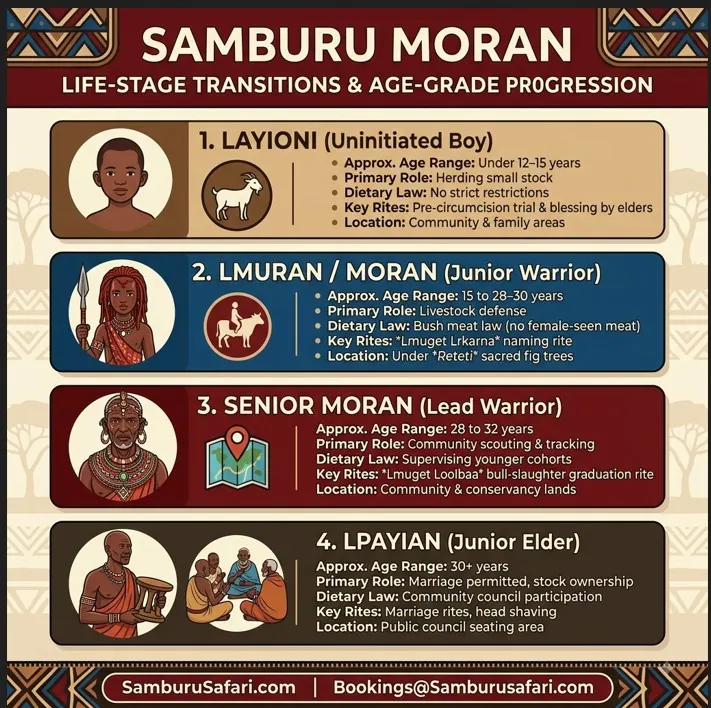
Walking safaris | Restricted to lodge grounds | Full bush walks with armed Samburu Morans |
Community management means lower vehicle density and broader exploration. Guided night game drives use red spotlights to find aardvarks, bat-eared foxes, striped hyenas, and white-tailed mongooses. Full-day foot work runs as a walking safari with an armed ranger.
Because night drives and walking safaris are strictly prohibited inside Samburu National Reserve, West Gate unlocks nocturnal species and intimate ground tracking. Red-filtered spotlights protect animal eyes while revealing active predators and elusive nocturnal mammals. This guide outlines what to expect during these exclusive conservancy activities.
African Spice Safaris
Activity | Target Wildlife | Key Advantage / Rule |
Night Drive (Post-sunset) | Aardvark, striped hyena, leopard, genet | Red-filtered spotlights required; off-road access allowed. |
Bush Walk (Early AM) | Tracking lion prints, dik-diks, flora, birding | Escorted by armed Samburu Morans & rangers. |
River Patrol (Dusk) | Elephant herds, wild dogs, bat-eared foxes | High probability at Ewaso Nyiro water crossings. |
The Grevy’s zebra — narrow stripes, big rounded ears, white belly — is the focus of conservation work here.
Protection relies on local Samburu youths known as Grevy’s Zebra Ambassadors, who patrol the dry riverbeds on foot. Using mobile tracking apps they photograph zebra flanks to log individual stripe patterns into a database. On morning walks you can join them and learn to read tracks in soft sand before the midday sun bakes the soil hard.
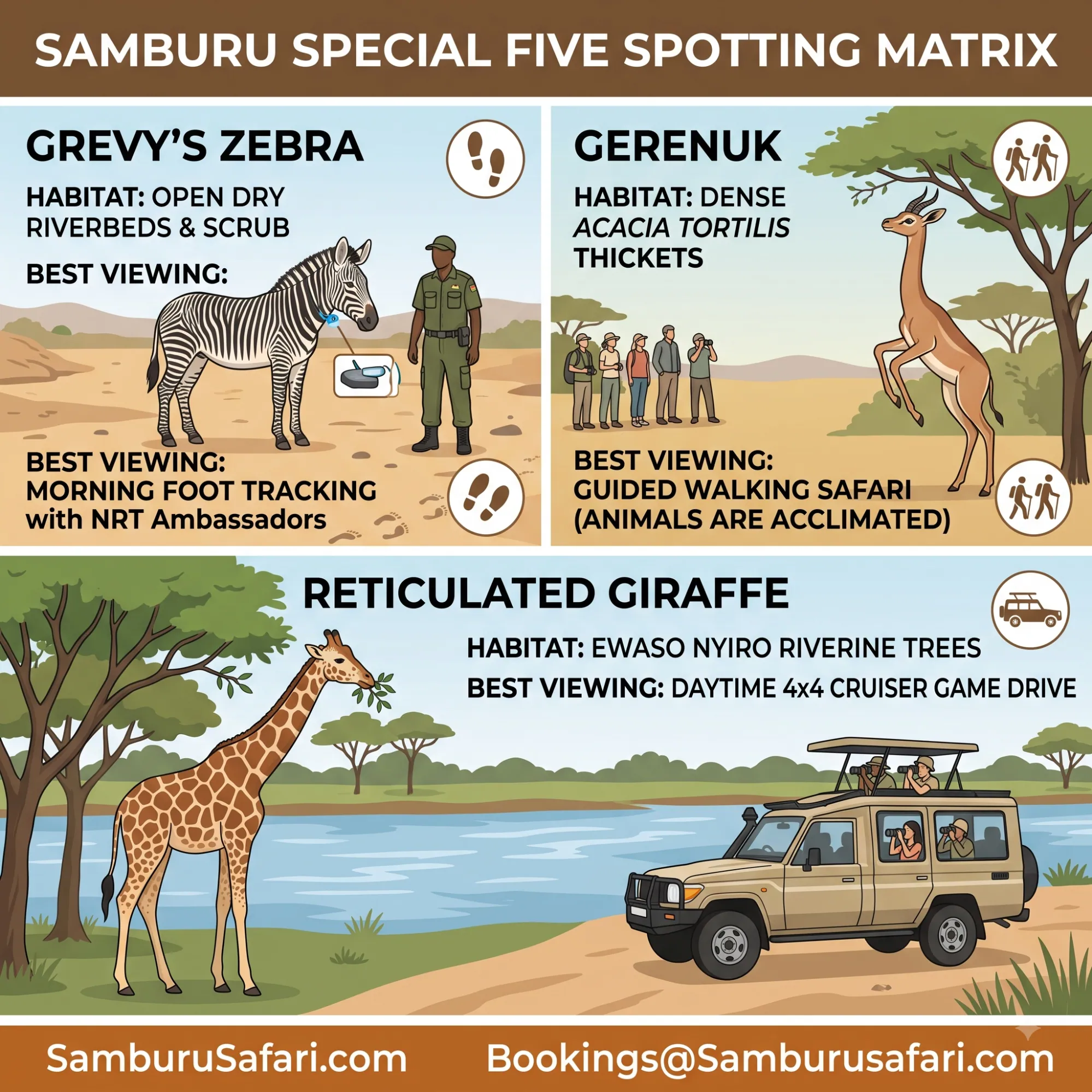
Northern Kenya’s “Samburu Special Five” are unique endemic species adapted to arid rangelands. Due to lower vehicle traffic and open walking access in West Gate, tracking behaviors differ significantly from the public national reserve. Use this quick reference matrix to optimize your game viewing strategy on foot versus in a 4×4.
Species | West Gate Habitat | Best Viewing Method |
Grevy’s Zebra | Open dry riverbeds & scrub | Morning foot tracking with NRT Ambassadors |
Gerenuk | Dense Acacia tortilis thickets | Guided walking safari (animals are acclimated) |
Reticulated Giraffe | Ewaso Nyiro riverine trees | Daytime 4×4 cruiser game drive |
Outside the main gates near Archer’s Post, several cultural villages cater to quick tourist stops. Those visits can feel transactional.
Inside West Gate, cultural stops happen in working homesteads where pastoralists live alongside predators. You will see Smart Bomas — livestock enclosures with predator-proof fencing and solar-powered flickering LED lights that mimic a patrolling human, keeping lions and hyenas out overnight without harming them.
Fly in and you land at the unpaved West Gate airstrip. No paved runway, no terminal building.
Before an aircraft comes in, local Morans walk the length of the strip with wooden sticks, moving grazing goats, dik-diks, and reticulated giraffes off the landing path. Once the plane is down, luggage goes straight into open 4x4s under the doum palms.
The gerenuk is Swala Twiga in Swahili — the giraffe gazelle — for the long neck that lets it stand on its hind legs to reach acacia.
In the open sections of the national reserve, gerenuks bolt at the sound of an engine. In the thick Acacia tortilis bushland of West Gate, they are used to herders on foot, so a guided walk gets you far closer than a vehicle ever will.
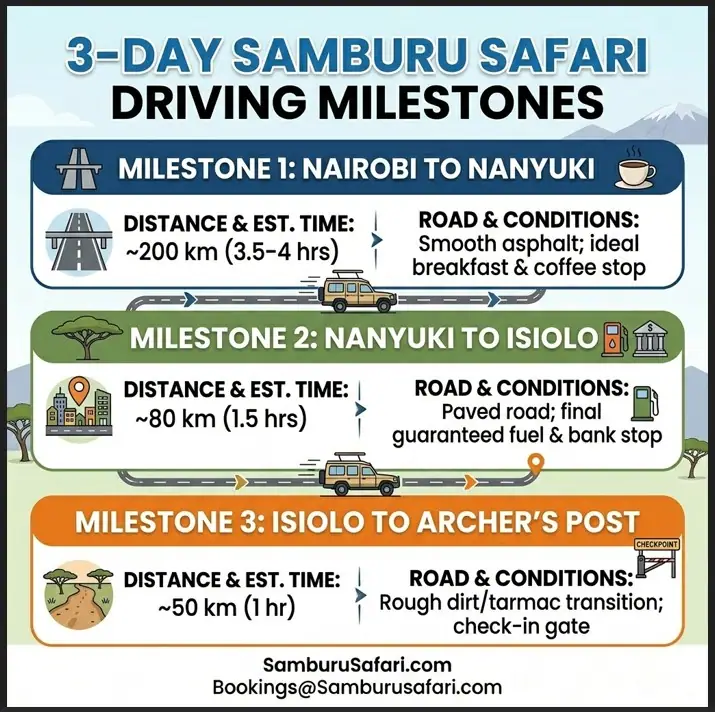
Bumpy transfers and dusty roads. Nairobi to Archer’s Post takes six to seven hours. The A2 is paved past Nanyuki and Isiolo, but the final stretch into the conservancy is dirt. If you get motion sickness, bring medication and insist on a high-clearance 4×4 rather than a minivan. Route detail is on our driving from Nairobi to Samburu page.
Extreme arid heat. Midday regularly passes 35°C, and fine red dust settles on lenses, daypacks, and clothes. Lightweight cotton, a wide-brimmed hat, and zip-top bags for electronics.
Seasonal river swells. In April, May, and November the lagas fill with water and deep mud fast. A track that was dry in the morning can need a two-hour detour by afternoon. Experienced guides watch river levels and adjust the day’s route around them.
June to October and January to February. Wildlife congregates along the river and the permanent waterholes, which makes tracking far easier.
Neither is better — they complement each other. The reserve has higher wildlife density along the riverbanks. West Gate offers night drives, walking safaris, and genuine community visits away from the vehicle lines.
Five rare species adapted to northern Kenya: Grevy’s zebra, reticulated giraffe, Beisa oryx, Somali ostrich, and gerenuk. Our Samburu Special 5 guide covers where to find each one.
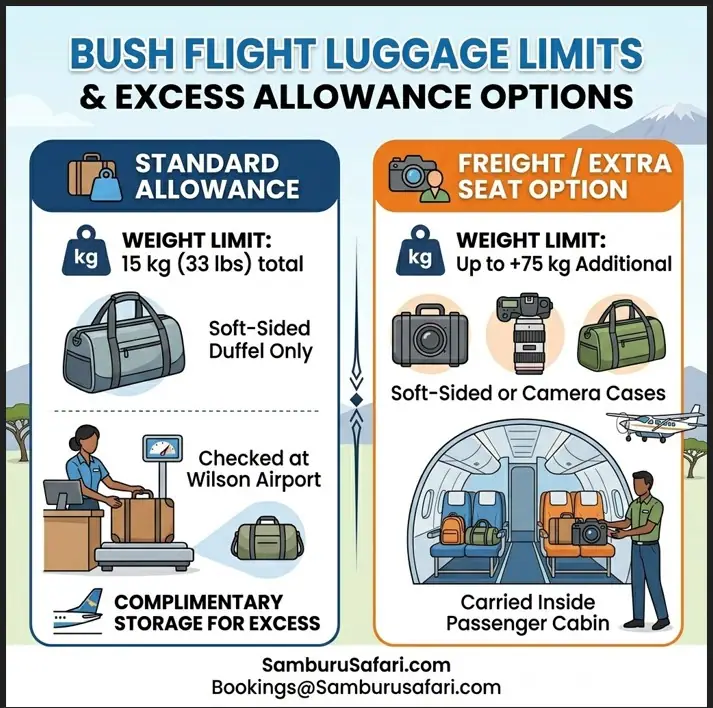
Drive the paved A2 through Isiolo to Archer’s Post (six to seven hours), then a dirt track transfer into the conservancy. Or take a bush flight from Wilson Airport straight to West Gate or Kalama airstrip.
Whether you want to track Grevy’s zebra on foot, run a night game drive, or work the riverbanks, local advice makes the trip. Browse the full range across our Samburu safari packages, or talk to our planning team about your dates.
Conservancy access, activities, and community fee structures checked on the ground by our guides. Last updated July 2026.
Message us directly for custom itineraries and the latest seasonal offers.