
Drive into Namunyak and the rumble of main road traffic disappears behind you. What replaces it is mountain water moving through granite gorges in the Mathews Range, and the chanting of Samburu warriors coming up out of dry riverbeds.
When travellers ask us about planning a trip to Namunyak Conservancy, we give them the ground facts: how to visit Reteti, why cameras are forbidden at the Singing Wells, and how to choose between mountain forest camps and canopy treehouses.
Written by Patrick Mulei. Reviewed by Anthony Mule.
These quotes cover two adults travelling together. Every rate includes full board, private or stationed 4×4 Land Cruiser transit with guide and fuel, conservancy entry fees, and AMREF emergency evacuation cover.
Package Setup | Transport & Details | Best Suited For | Rate Per Person |
2N Overland Bush Safari — Kitich Forest Camp | 3 days private 4×4 & guide • Full board mountain forest stay and fees | Hikers and birdwatchers working the montane forest | $2,490 — Get a quote |
2N Sky Fly-In Luxury — Sarara Treehouses | Return flights Wilson → Namunyak or Kalama • Stationed 4×4 game drives | Canopy views and fast transfers | $3,850 — Check dates |
Package Setup | Transport & Details | Best Suited For | Rate Per Person |
3N Overland Northern Circuit — Sarara Camp (2N) + Ol Pejeta Bush Camp (1N) | 4 days private 4×4 & guide • Conservancy fees and Ol Pejeta entry | Multi-conservancy circuits across Laikipia and Namunyak | $4,440 — Build my itinerary |
Inclusions: Full board at the named lodges, private or stationed 4×4 with guide and fuel, Namunyak conservancy daily fees, AMREF Flying Doctors evacuation cover, and scheduled bush flights on fly-in options.
Exclusions: International flights, Kenya e-visas, personal travel insurance, premium cellar wines, driver-guide tips, and Reteti Elephant Sanctuary entrance fees.
That Ol Pejeta pairing is covered in full on our Samburu and Ol Pejeta combo page, and the deeper northern route through the Mathews Range runs on our 7 day northern Kenya circuit.
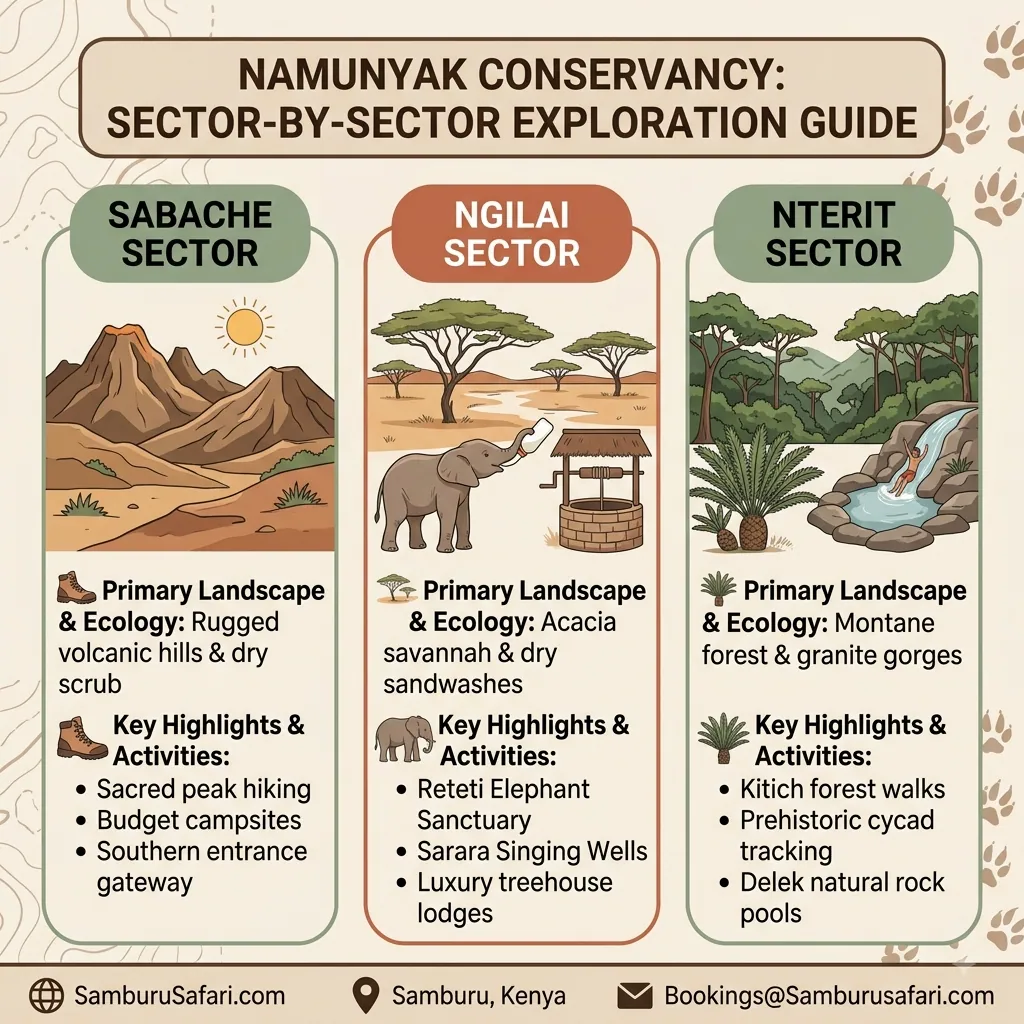
Spanning 850,000 acres around the Mathews Range, Namunyak is one of East Africa’s largest community-owned wildlife areas. It is run by the local Samburu community alongside the Northern Rangelands Trust, split into three administrative sectors:
Driving clients through the Ngilai valley at dawn, we regularly find elephant herds moving between the acacia thickets and the mountain springs. This land works as a migration corridor linking Mount Kenya, Ngare Ndare Forest, and the northern habitats.
Sector-by-Sector Exploration Guide
Spanning 850,000 acres, Namunyak Conservancy is partitioned into three distinct administrative and ecological sectors managed by the local Samburu community. Each sector offers a unique landscape, distinct primary attractions, and varied safari activities ranging from mountain trekking to elephant encounters. Use this sector breakdown to decide where to focus your Northern Kenya itinerary.
Sector Name | Primary Landscape & Ecology | Key Highlights & Activities |
Sabache Sector | Rugged volcanic hills & dry scrub | Sacred peak hiking, budget campsites, southern entrance gateway. |
Ngilai Sector | Acacia savannah & dry sandwashes | Reteti Elephant Sanctuary, Sarara Singing Wells, luxury treehouse lodges. |
Nterit Sector | Montane forest & granite gorges | Kitich forest walks, prehistoric cycad tracking, Delek natural rock pools. |
In the Ngilai sector, Reteti is Africa’s first community-owned elephant orphanage. Local Samburu keepers rescue orphaned and injured calves from across northern Kenya, rehabilitate them, and release them back into wild herds.
Reteti does not use commercial formula. The sanctuary buys thousands of litres of fresh goat milk every day from hundreds of local Samburu women — the Milk Mamas — which puts direct income into pastoralist households while giving the calves natural nutrition.
Visitors can watch a morning bottle-feeding session, and advance booking is required. Confirm the current session times and the entrance donation when you book, since both shift with the sanctuary’s schedule. The fee goes straight into medical care, keeper wages, and calf feed.
Watching the elephant herds these calves eventually rejoin is the other half of the story, tracked by collar across the wider ecosystem.
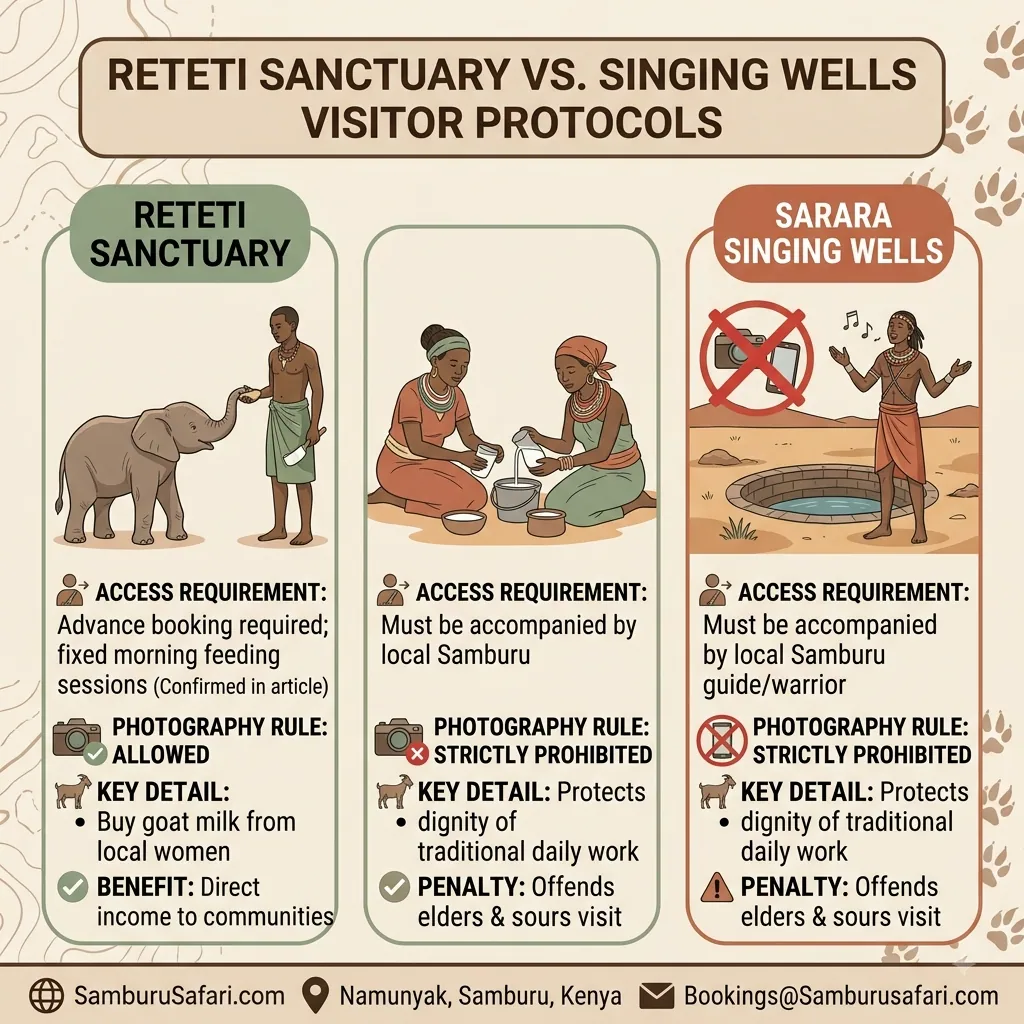
Visiting Namunyak Conservancy requires navigating unique community protocols designed to protect both wildlife and cultural dignity. While Reteti Elephant Sanctuary encourages photography and public educational sessions, the traditional Samburu Singing Wells enforce strict restrictions. Understanding these ground rules ensures a seamless and respectful safari experience.
Attraction / Site | Access Requirements | Photography Rule |
Reteti Elephant Sanctuary | Advance booking required; fixed morning feeding sessions | Allowed (Personal photos encouraged, commercial use needs permits) |
Sarara Singing Wells | Must be accompanied by local Samburu guide/warrior | Strictly Prohibited (No cameras, phones, or recording devices permitted) |
Community Bomas & Cooperatives | Arranged via lodge/conservancy community liaison | Allowed with Permission (Always ask elders before photographing individuals) |
Through the dry months, Samburu pastoralists bring cattle down to the dry sandwashes. Warriors dig deep water pits by hand and sing family-specific melodies. The livestock recognise their own family’s song and walk down into the sand trench to drink.
The rule: no photography or video at the Singing Wells. Local elders enforce it to protect the dignity of what is essentially daily work, not a performance.
Guiding guests here, I always ask them to leave cameras in the Land Cruiser. Attempting a stealth shot with a phone offends the elders and sours the whole visit. Stand quietly, listen to the chants echo off the canyon walls, and let that be enough. It usually is.
Month | Climate & Bush Conditions | Wildlife & Highlights | Best For |
Jan – Feb | Dry, hot (30–35°C), clear skies | High concentration near the Sarara waterhole; prime Singing Wells season | Peak season |
Mar – May | Long rains, lush green vegetation | Elephant calf birthing; waterfalls flowing in the Mathews Range | Green season |
Jun – Oct | Cool dry breezes (25–30°C) | Peak gathering at water points and mountain springs | Peak season |
Nov – Dec | Short rains, brief afternoon showers | Excellent birding with migratory arrivals; low crowds | Shoulder season |
The full month-by-month picture is in our best time to visit Samburu breakdown, and the 450-plus recorded bird species across the ecosystem peak here in the short rains.
High in the upper Mathews Range sits Kitich Forest Camp. Unlike the open acacia plains below, this montane forest belongs to another era entirely.
The forest holds an ancient endemic plant, the Encephalartos cycad, growing on these slopes since long before any of the mammals arrived. Guided forest walks with Samburu trackers also turn up rare monkey species living high in the mountain canopy.
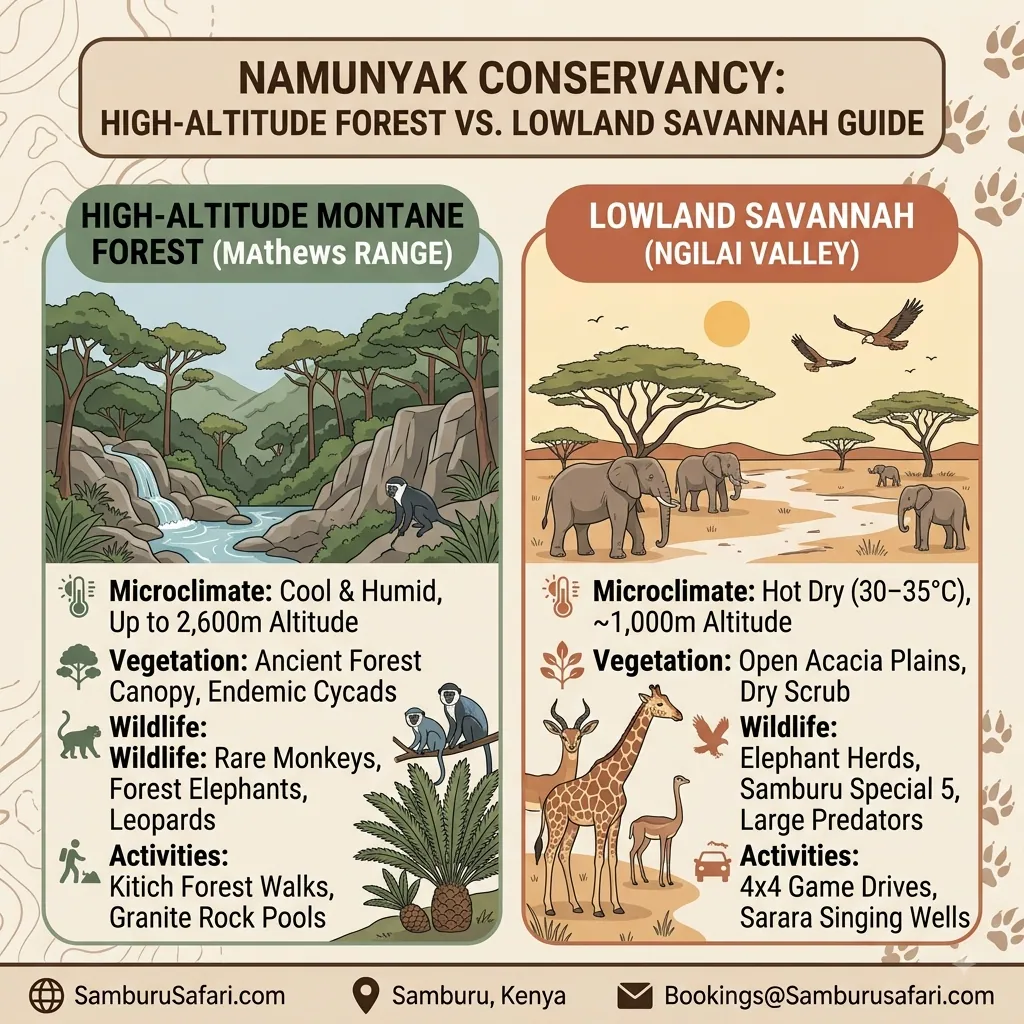
Namunyak offers a striking contrast between the hot, open savannahs below and the cool, ancient montane canopy of the Mathews Range. The extreme change in elevation directly impacts temperatures, endemic flora, and the types of wildlife activities available. This guide contrasts what to expect when moving from the valley floor up into the mountain forest.
Ecosystem Zone | Elevation & Microclimate | Wildlife & Flora Highlights |
Lowland Savannah (Ngilai Valley) | ~1,000m altitude; hot & dry (30–35°C) | Elephant herds, Samburu Special 5, acacia-adapted raptors. |
Montane Forest (Mathews Range) | Up to 2,600m altitude; cool & humid | Prehistoric Encephalartos cycads, rare canopy monkeys, mountain streams. |
Granite Gorges (Delek Area) | Mid-elevation rock pools & waterfalls | Klipspringers, leopards, natural rock slide swimming pools. |
Water off the Mathews Range has carved natural channels through the granite:
Watching the herds gather at that waterhole below the pool deck at dusk is, after twelve years driving these routes, still one of the quietest genuinely authentic wildlife experiences in Kenya. Nobody talks much during it.
The northern endemics are all here too — our Samburu Special 5 guide covers what to watch for on the drive in.
Unlike the national reserves with their evening gate curfew, Namunyak permits flexible wilderness activities:
Long rough transits. Samburu National Reserve to Sarara Camp takes two to two and a half hours over corrugated dirt. If rough roads bother you, fly into Namunyak or Kalama instead.
High price point. Sarara and Reteti House are high-end eco-properties. Budget travellers should look at the community campsites near Sabache, or compare tiers across our luxury lodges in Samburu roundup.
No cameras at cultural sites. Respecting the ban at the Singing Wells means setting aside the urge to document every minute. Most guests find that a relief by the second day.
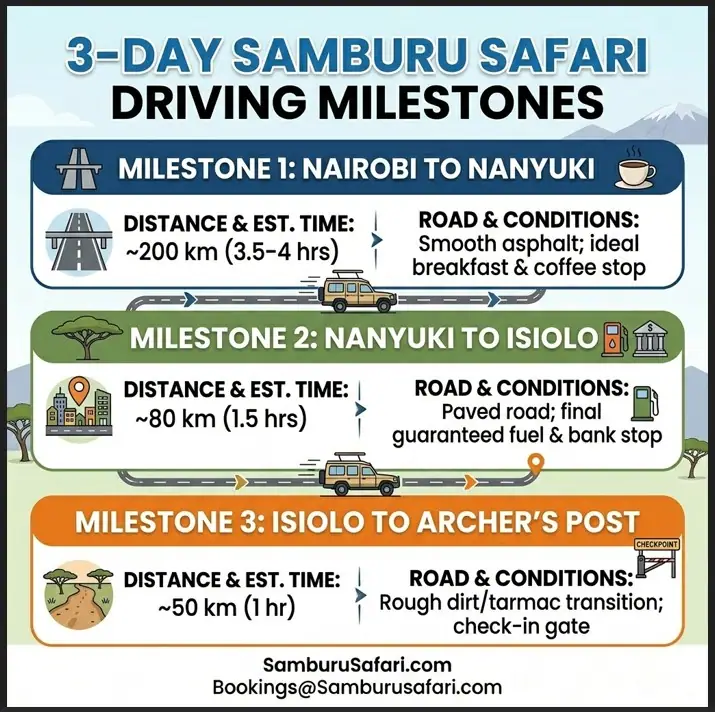
Route detail for the drive up is on our driving from Nairobi to Samburu page.
Browse the full range of routes across our Samburu safari packages.
In Samburu County, northern Kenya, surrounding the Mathews Mountain Range just north of Samburu National Reserve.
No. Photography and video are forbidden by the local Samburu elders to preserve the dignity and privacy of the ritual.
Reteti sits in the Ngilai sector of Namunyak. Public feeding sessions run on a set daily schedule and entry permits must be booked in advance — confirm times and current fees when you reserve.
Conservancy access, sector boundaries, and cultural protocols checked on the ground by our guides. Last updated July 2026.
Message us directly for custom itineraries and the latest seasonal offers.