
Pitching your tent under a shaded Doum palm near the Ewaso Nyiro at 3:00 PM feels ideal. At 2:00 AM, when the baboons roosting overhead start dropping heavy palm nuts onto your flysheet, you understand why experienced guides pitch twenty feet back from the tree line.
When travellers ask us about camping in samburu, we skip the brochure version. Real bush camping inside the reserve means understanding baboon behaviour, sourcing firewood legally, and knowing how to secure a cook box against midnight scavengers.
Written by Patrick Mulei. Reviewed by Anthony Mule.
These 2027 quotes cover two adults travelling together in a private 4×4 Safari Land Cruiser. Every price includes camping gear, a private cook, full board meals, Land Cruiser transit with guide and fuel, park permits, campsite fees, and emergency medical cover.
Package Setup & Focus | Transport & Setup | Total Rate Per Person |
2N Classic Public Bush Camp — Samburu public campsite | 3 days private 4×4 Land Cruiser & guide • Dome tents, camp chef, park fees | $1,180 — Get a quote |
2N Wilderness Special Camp — Ewaso Nyiro special site | Private 4×4 Land Cruiser & mobile toilet • Fully self-contained wilderness setup | $1,380 — Check dates |
Package Setup & Focus | Transport & Setup | Total Rate Per Person |
3N Full Samburu Wilderness — Public & special campsites | 4 days private 4×4 Land Cruiser & guide • Full mobile camp setup, river loops | $1,580 — Price this trip |
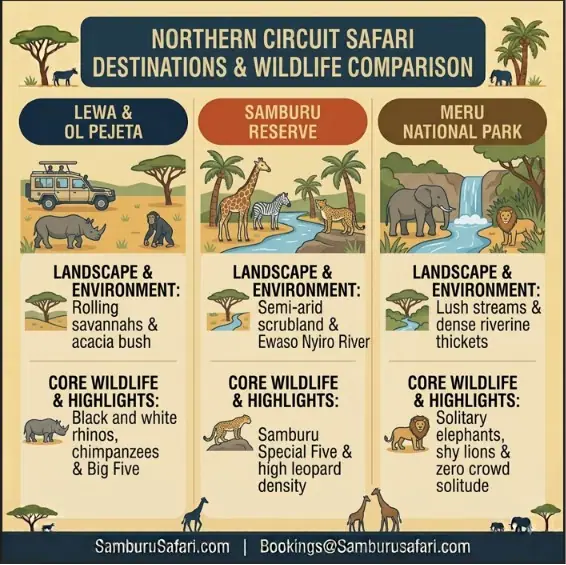
3N Northern Circuit Combo — Samburu camp (2N) + Sweetwaters (1N) | 4 days private 4×4 Land Cruiser & guide • Samburu camping plus Ol Pejeta tented lodge | $1,880 — Build my itinerary |
Inclusions: Full mobile camping setup (heavy-duty canvas tents, cots, bedding, mess tent), private camp cook and all meals, private 4×4 with guide and fuel, Samburu Reserve daily park fees, campsite fees, AMREF Flying Doctors evacuation cover, and daily bottled water.
Exclusions: International flights, Kenya e-visas, personal travel insurance, alcoholic drinks, tips for guide and cook, local askari night tips, and Reteti Elephant Sanctuary entrance fees.
That Ol Pejeta pairing is covered in full on our Samburu and Ol Pejeta combo page. If canvas without the work appeals more, our roundup of the best tented camps covers full-service alternatives at every budget.
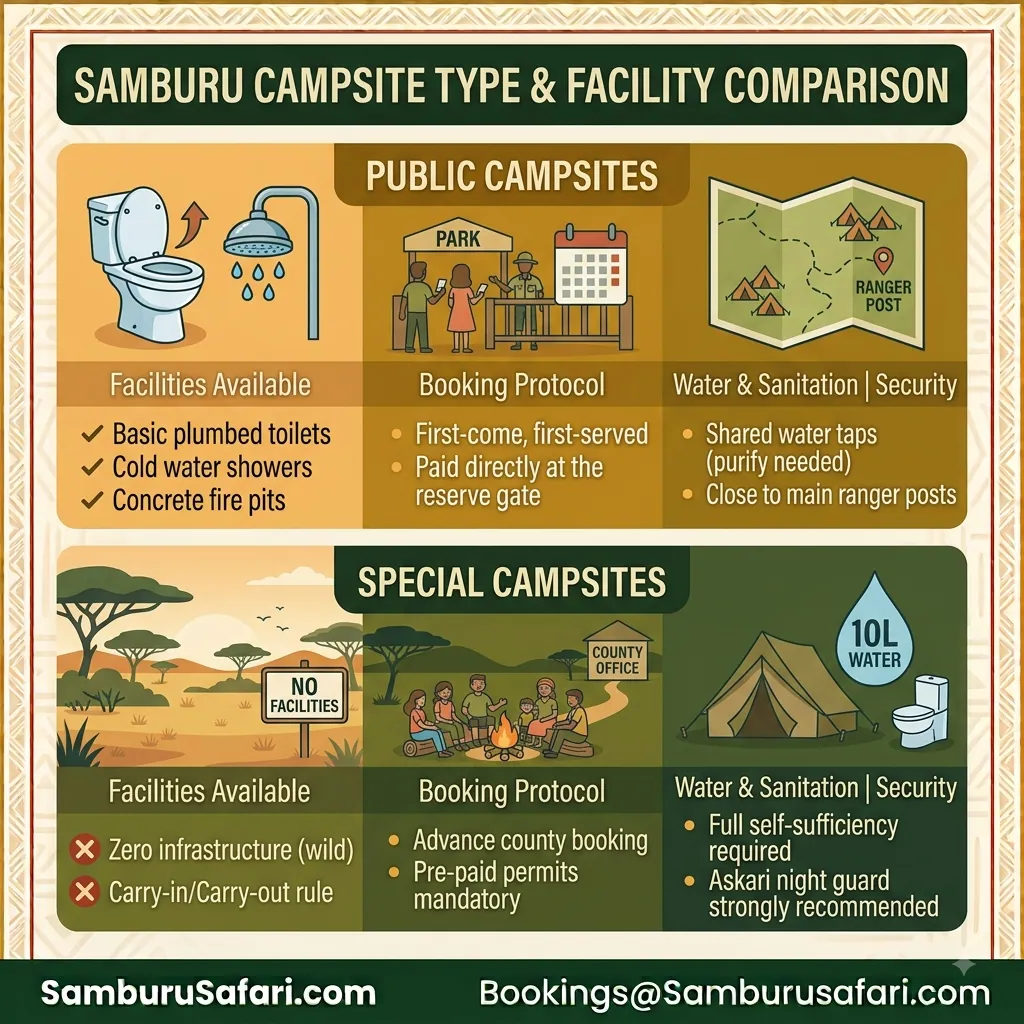
Want basic plumbing? Take a public site. Want dead-silent bush isolation where you can hear lions walking past your pitch? Book a special site. Here is how the main options compare.
Choosing between a public and a special campsite inside Samburu National Reserve determines your level of comfort and wilderness exposure. Public campsites offer basic shared plumbing, cold showers, and proximity to ranger posts for added peace of mind. In contrast, special campsites offer complete, unfenced bush isolation where you must pack in all water, waste systems, and security. Review the core trade-offs below to select the right camping setup for your self-drive or guided itinerary.
Feature / Aspect | Public Campsites | Special Campsites |
Facilities Available | Cold showers, flush toilets | Zero facilities (wild) |
Booking Protocol | First-come at gate | Advance county booking |
Water & Sanitation | Shared tap water | Pack-in water & chemical toilet |
Wildlife Crowds | Higher human presence | Complete bush isolation |
Security Setup | Near main ranger posts | Askari night guard mandatory |
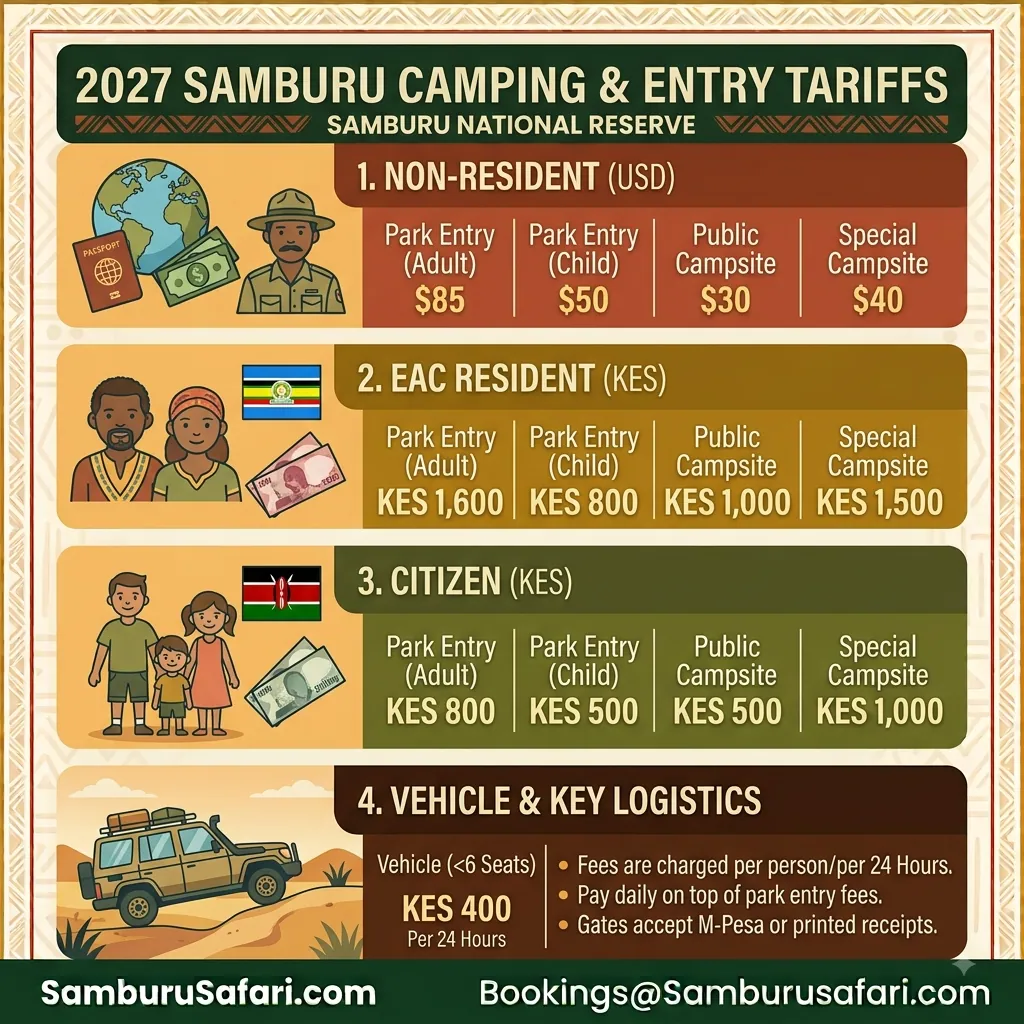
Overlanders and Kenyan residents travelling on East African Community status pay entry and camping tariffs in Kenya Shillings rather than US dollars, at a substantial discount across every category — park entry, public and special campsites, and vehicle entry.
Confirm the current rate card before you travel, since county tariffs change. Full detail sits on our Samburu park fees page, and the wider trip budget is broken down in our Samburu safari cost guide.
Calculating total camping costs in Samburu requires accounting for daily park entry, campsite access, and vehicle permits per 24-hour period. While international non-residents pay tariffs in US Dollars, East African EAC residents and Kenyan citizens receive discounted rates in Kenya Shillings. These official county fees apply equally whether you choose a public ground site or a remote special site along the Ewaso Nyiro. Use the field breakdown below to budget your daily permit costs before arriving at Archer’s Post Gate.
Category & Permit | Non-Resident (USD) | EAC Resident (KES) | Citizen (KES) |
Park Entry (Adult) | $85 | KES 1,600 | KES 800 |
Park Entry (Child) | $50 | KES 800 | KES 500 |
Public Campsite | $30 | KES 1,000 | KES 500 |
Special Campsite | $40 | KES 1,500 | KES 1,000 |
Vehicle (<6 Seats) | KES 400 | KES 400 | KES 400 |
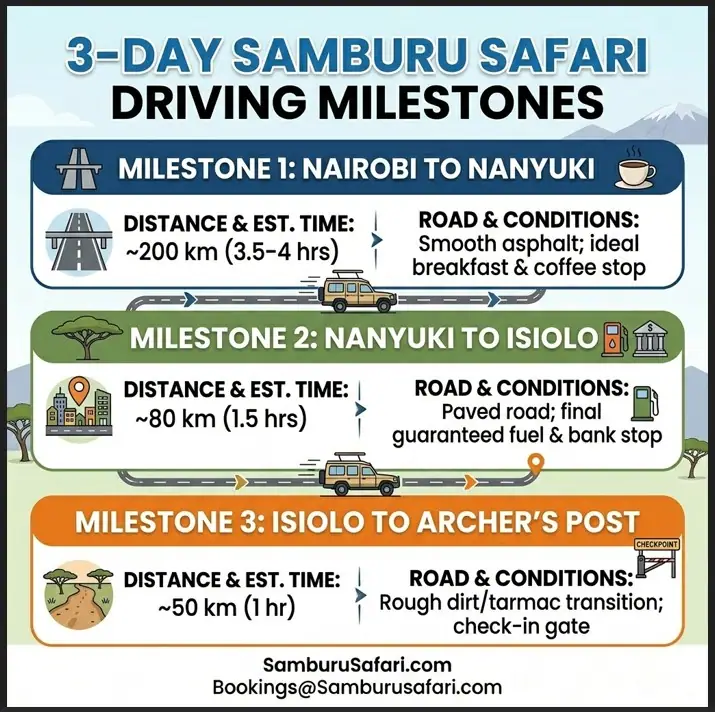
If you are driving up from Nairobi with a roof-top tent or ground setup, plan the stops before you hit dirt.
Stop in Nanyuki or at Isiolo. That is your last chance at bundled firewood, block ice, fresh vegetables, and drinking water before the corrugated road to Archer’s Post. Gate payment systems freeze when network coverage drops, so load M-Pesa or print physical receipts in Isiolo before driving up.
Bring a minimum of five litres of clean drinking water per person per day. Do not plan to filter from the Ewaso Nyiro. The river runs heavy with silt, agricultural runoff, and mud that clogs a standard camping filter within minutes.
A high-clearance 4×4 is required for the deep sand laggas around the campsites — our self drive Samburu guide covers vehicle spec, recovery gear, and tyre strategy in detail. If you are using ground tents, lay a heavy-duty rubber groundsheet first. The ground here is covered in wait-a-bit thorns that punch straight through thin tent floors and inflatable pads.
Ask any ranger at Archer’s Gate about Christina. She is the alpha female of the main public camp baboon troop, and she works a cooler bag zipper faster than most people.
Patrick has watched her troop unzip a tent window, pull out a sealed loaf of bread, and be back up an acacia inside two minutes while the campers stood fifty feet away taking photographs.
Hire a local Samburu askari through the main ranger post. A night watchman keeps baboons and vervets from tearing canvas while you are out on a game drive, and the cost is trivial against a ruined tent.
When the ground is baking at 39°C, pitching directly under a dense Doum palm looks like the obvious move. Do not do it. Baboons and monkeys roost in those branches overnight, and you will spend the night listening to palm nuts and droppings hit your flysheet. Pitch fifteen feet back from the branch canopy — you still get the shade, without the roosting mess.
The full month-by-month picture is in our best time to visit Samburu breakdown.
The full clothing and gear list sits in our Samburu safari packing list.
Nile crocodiles line the mudbanks here. In midday heat they look like harmless grey logs. They are not. Never step within ten feet of the water’s edge after 5:30 PM. If you are drawing river water for washing, do it in full daylight with a bucket on a rope from a high bank.
After dark, an open fire attracts spotted hyenas and genets. Hyena jaws go through soft canvas easily, and they will drag off a metal pot that smells of grease. Lock food trunks, cool boxes, and grill grates inside the vehicle before you sleep.
Moses keeps a low-beam lantern lit at the camp perimeter, which discourages hyenas from stepping past the fire circle. It costs nothing and it works.
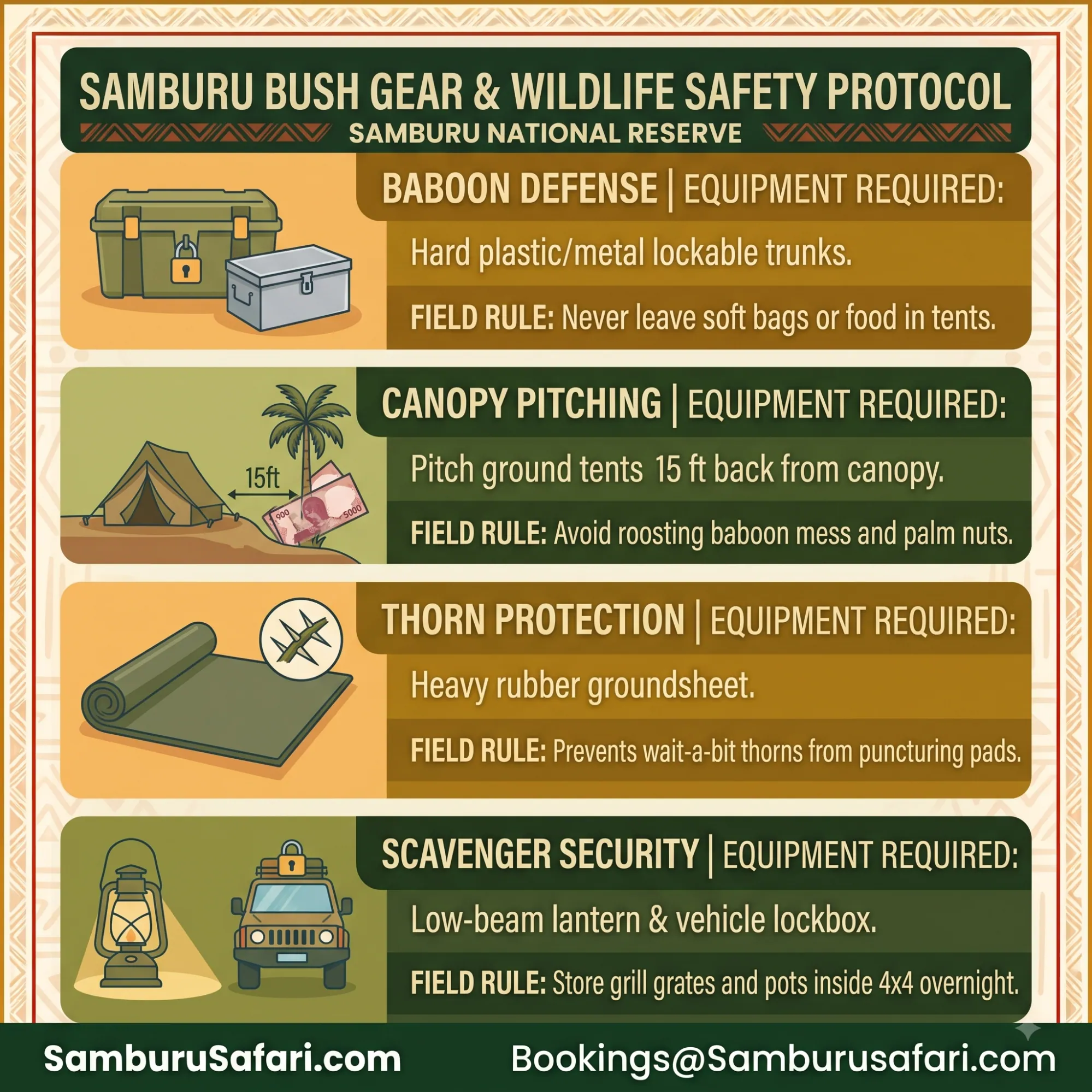
Camping safely along the Ewaso Nyiro River requires proactive camp management and strict wildlife rules. Troop baboons, roosting monkeys, and nocturnal scavengers like spotted hyenas will quickly exploit unsecured food or poorly pitched tents. Additionally, steep riverbanks and sharp wait-a-bit thorns require specific gear choices to protect your ground equipment and personal safety. Use this quick-reference field protocol to secure your pitch and avoid common bush camping mistakes.
Hazard / Need | Equipment Required | Actionable Field Rule |
Baboon Defense | Hard plastic / metal trunks | Never leave soft bags or food in tents. |
Canopy Pitching | Pitch 15 ft back from canopy | Avoid roosting baboon mess and palm nuts. |
Thorn Protection | Heavy rubber groundsheet | Prevents wait-a-bit thorns from puncturing pads. |
Hyenas & Scavengers | Low-beam lantern & lockbox | Store grill grates and pots inside 4×4 overnight. |
River Crocodiles | Rope bucket for washing | Stay 10 ft away from water edge after 5:30 PM. |
Browse the full range of routes across our Samburu safari packages.
Yes, provided you follow basic bush rules. Store all food inside a hard-shell vehicle, hire a local askari for night security, and stay away from the riverbank after dark.
Public campsites work first-come, first-served, paid at the gate. Special campsites require advance booking and permits through the county reserve offices.
Basic cold-water showers, flush toilets, and concrete fire pits. Special campsites have nothing at all, so you carry your own water, chemical toilet, and waste bags.
Campsite conditions and facilities checked on the ground by our guides. Last updated July 2026.
Message us directly for custom itineraries and the latest seasonal offers.