
Quick Answer: Pack lightweight, breathable clothing in khaki, tan or olive drab, and leave camouflage, pure white, dark blue and black at home. The essentials are thick-soled boots against acacia thorns, daily contact lenses with saline eye wash, 8×42 binoculars, a multi-plug strip for timed camp power, electrolyte powder for dry heat, reusable TPU dry bags (Kenya bans plastic bags), and a soft duffel to meet the 15kg flight limit. The rest of the trip logistics sit in our planning a samburu safari section.
Written by Gerard Murero. Reviewed by Benson Kungu.
Screenshot this before you read the detail.
Category | Must-Pack Gear | Quick Field Reason |
Footwear | Thick-soled Chukka boots or trail runners, camp sandals | Acacia thorns go straight through thin canvas or mesh. |
Clothing | 3–4 neutral tops (khaki/tan), 2 convertible trousers, fleece layer, wide-brim hat, sports bra | Avoid black and blue (tsetse), white (dust), camouflage (illegal). |
Rain Gear | Lightweight packable rain jacket | Needed in the green seasons (April–May, November). |
Optics | 8×42 or 10×42 binoculars, one pair per person | Wildlife spreads across wide riverbed country. |
Electronics | Multi-plug extension strip, 20,000+ mAh power bank | Bush camps cut wall power midday and overnight. |
Dust Defence | Reusable TPU dry bags, elastic shower cap, microfiber buff | Fine red silt destroys zoom lenses; plastic bags are illegal. |
Health & Body | Electrolyte packets, daily contact lenses, saline eye wash, SPF 50+, DEET | Arid heat accelerates dehydration and dries eyes badly. |
Night Gear | Headlamp with red LED mode, 395nm UV torch | Red light avoids startling wildlife; UV picks out scorpions. |
Money & Docs | Printed eTA, passport, KES cash, yellow fever card | No ATMs inside the reserve; cash for tips and beadwork. |
Packing for the north is not packing for the southern plains. Near the Ewaso Nyiro, daytime heat runs past 35°C and fine red volcanic dust blows through an open vehicle all day. Get the clothing wrong and you will know within the first two hours.
When you book with Samburusafari.com, our ground team starts on your gear weeks before you fly. Angie Muthoni, our senior travel manager, sends the pre-departure briefing so nobody arrives at Wilson Airport and discovers the luggage limit for the first time. Out on the tracks our driver-guides carry spare dust covers, charging ports and cold water.
Last August a guest wore thin canvas trainers on a short guided walk near camp. Ten minutes in, a 7 cm spike off a whistling thorn (Vachellia drepanolobium) went through the sole and into his foot. We turned the walk around and cleaned the wound back at camp. The northern scrub does not forgive thin footwear — bring gear built for it, or the bush will take it apart.
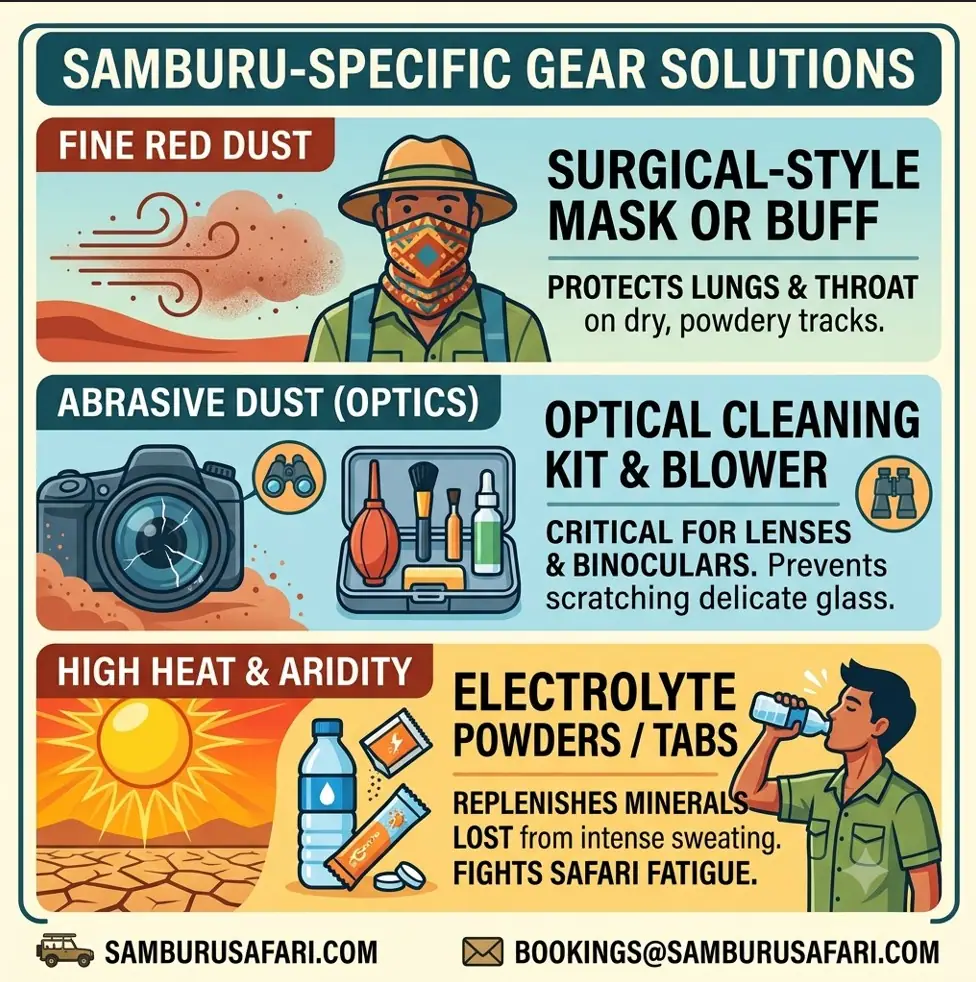
Special Condition | Recommended Item | Why it’s Vital in Samburu |
Fine Red Dust | Surgical style or Buff mask | Protects lungs during game drives on dry, powdery tracks. |
Abrasive Dust | Optical cleaning kit (blower) | Dust ruins lenses; never wipe a dry lens in Samburu. |
High Heat/Aridity | Electrolyte powders/tabs | You lose more than water in the heat; prevents safari fatigue. |
Your clothing decides your comfort more than anything else you pack, because a single drive spans two climates. You leave at 05:45 into cold wind in a fleece and windbreaker, and by midday you are down to a light khaki shirt and a hat under hard sun. Layers you can shed and stuff into a daypack, not one warm jacket.
Mesh running shoes and canvas trainers are fine until you step out of the vehicle. Whistling thorn produces rigid needle-sharp spikes that pierce soft rubber without much resistance.
Pack leather Chukka boots or trail shoes with thick outsoles and a puncture-resistant shank. They earn their place on camp paths as much as on walks.
Every guide tells you to avoid dark blue and black because tsetse are drawn to them in riverine thicket. Fewer mention that pure white is just as bad: it throws harsh equatorial glare back into your viewfinder, and it holds red clay stains within about five minutes of the first dusty stretch.
Tan, khaki, olive green and stone grey. That is the whole palette.
Legal warning — Kenya’s camouflage ban. Do not pack civilian clothing in camouflage of any colour, desert and tan patterns included. Camouflage is reserved for the armed forces in Kenya, and wearing or carrying it through an airport or in public can mean confiscation, fines or questioning by police.
Samburu has a reputation for dry heat, but through April–May and November a downpour will catch you on an open track. Pack a packable rain shell. Dark khaki or olive trousers work better in these months because they hide the mud you pick up stepping out at viewpoints.
Rain also moves the herds, and our guide to the best time to visit samburu sets out how each season changes where the animals are.
Corrugated tracks and dry river crossings mean constant heavy bouncing for hours at a time. High-impact encapsulation sports bras, not standard daily bras.
A seamless microfiber neck buff is the other piece nobody packs and everybody borrows. It keeps red dust out of your throat on open drives, holds your hair down, and doubles as a cushion when you rest a heavy lens on the vehicle door rail.
Electronic Protection & Power Strategy: Technical details people often miss.
Equipment | Essential Accessory | Practical Purpose |
Camera/Binocs | Neoprene cover/Dry bag | Keeps dust out of seals while gear is sitting in the vehicle. |
Smartphone | Silicone port plugs | Fine dust settles in charging ports, causing connection failures. |
Power Bank | 10,000mAh minimum | Vehicles have chargers, but they are often slow or occupied. |
This is open country — broad acacia scrub and wide gravel riverbeds, with animals often a long way out. Do not plan on sharing one pair of binoculars around the vehicle. Everyone needs their own 8×42 or 10×42 waterproof pair.
Good glass is what separates a shape from a sighting when you are scanning riverbank thicket for a leopard or picking out the five northern endemics covered across our wildlife of Samburu section:
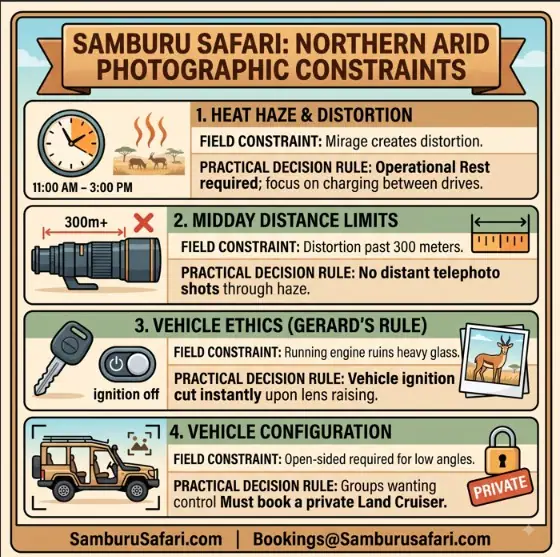
For stills, a telephoto zoom reaching 200–600mm covers the distances here. Body, lens and dust-handling choices are worked through properly in our safari photography gear guide.
Camps like Elephant Bedroom and Samburu Intrepids run on independent solar loops. To protect the batteries they usually cut 240V wall power between 10:00 and 15:00, and again from 22:00 to 05:00.
Your tent will have one UK 3-pin socket. Charging camera batteries, a power bank and a tablet inside those two narrow windows off a single outlet does not work, so bring a compact multi-plug strip. Add a 20,000+ mAh power bank with 65W USB-C output and you can top everything up in the vehicle during the midday break instead.
Red volcanic dust here gets through camera bag zippers and into zoom barrels.
Environmental law — single-use plastic ban. Kenya enforces a nationwide ban on single-use plastic bags. Customs officers routinely confiscate Ziploc freezer bags and grocery bags at Nairobi airports.
To protect your kit without breaking the law:
Humidity is low enough that sweat evaporates before you feel it. You lose water steadily without noticing, and the first sign is usually a bad afternoon headache. Plain bottled water runs through you without replacing minerals, so carry single-serve electrolyte powder and use it on morning drives.
Soft contact lenses dry out within about two hours in 35°C air carrying silt. Bring plenty of dailies, wrap-around polarised sunglasses, and sterile saline to flush your eyes at the end of the day.
Riverside camps are unfenced and animals walk the guest paths after dark. A bright white beam startles them and pulls every night insect onto your face. Pack a headlamp with a low-lumen red mode and use that between your tent and the dining area.
Bring a 395nm UV torch too. Shine it across the sand paths at night and burrowing scorpions light up bright green, which is either fascinating or the end of your barefoot habits.
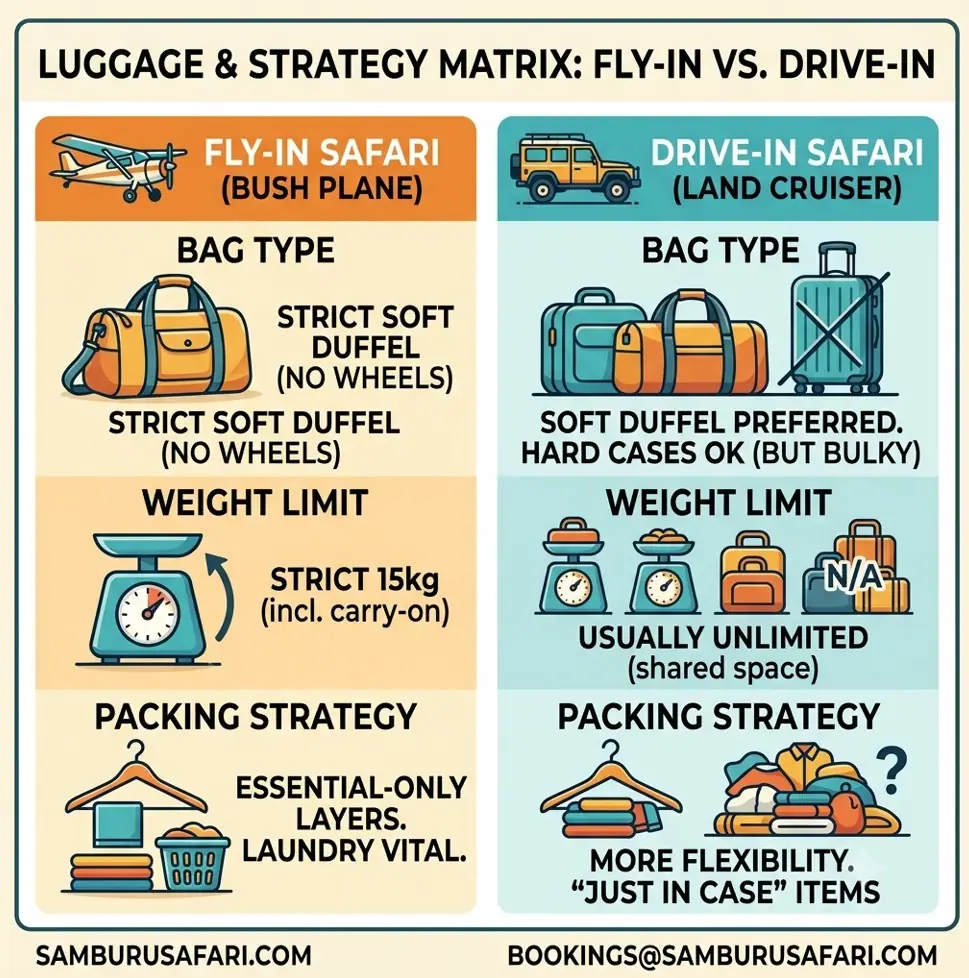
Transport Option | Luggage Weight Limit | Bag Structure Rules |
Overland 4×4 Land Cruiser | Flexible (20–25kg per person) | Soft or hard-sided suitcases |
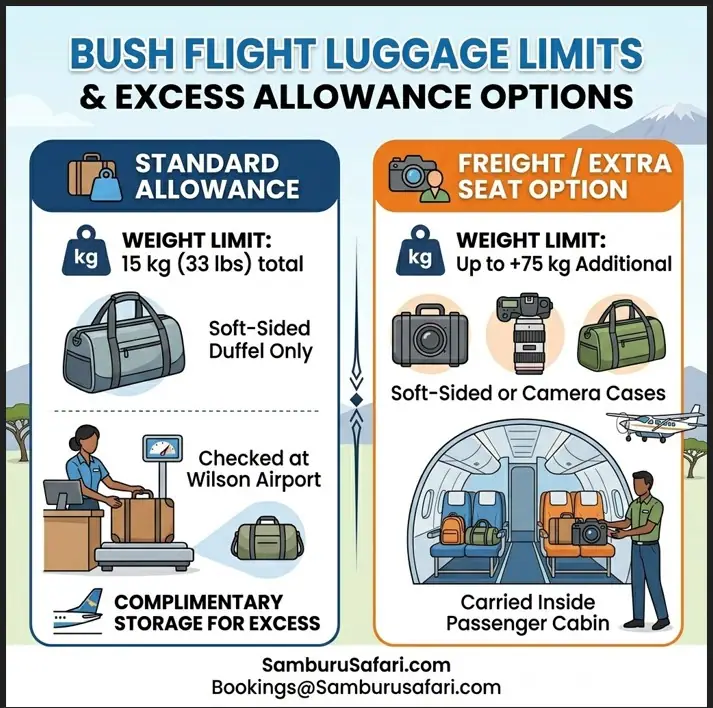
Regional flight from Wilson | Strict 15kg (33 lbs) total | Soft-sided duffels only, no hard spinners |
Ground staff at Wilson weigh you and your hand luggage together, and they will turn away hard spinner cases because they do not fit the cargo pods on a Cessna. The full airline picture is in our guide to flights from nairobi to samburu.
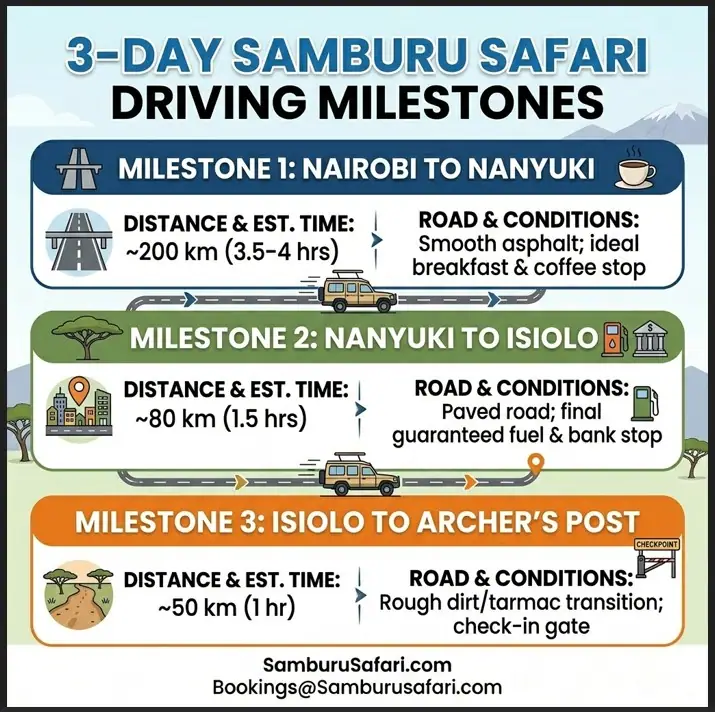
Coming up by road removes the problem entirely — space for tripods, extra lenses and a proper bag, which our guide to driving from nairobi to samburu covers alongside the road conditions.
No ATMs inside the reserve. The last reliable machines are hours back in Nanyuki or Isiolo. Draw your cash in Nairobi before you head north.
Carry Kenyan shillings. Lodges take cards for extras, but you want crisp KES notes for drinks, tips and anything bought outside the property.
Tipping. Customary is $10 to $20 USD per day for your driver-guide, and $5 to $10 per day into the lodge staff pool.
Manyatta dress code. Visiting a cultural centre, cover shoulders and knees. Bring cash if you want to buy beadwork directly from the women who made it.
Do camps offer laundry? Yes, most do it daily. Everything is hand-washed and solar-dried, so turnaround depends on the weather, and most camps will not wash women’s underwear for cultural reasons. A small bottle of travel detergent handles that in the sink.
What stays in the daypack on a game drive? Keep it on the seat beside you, not in the boot: fleece, sunglasses, sunscreen, electrolyte bottle, eye wash, binoculars, and camera gear in its dust wrapping.
What kind of hat works best? A wide brim in breathable cotton or nylon, with a chin strap. Open vehicles generate real wind and an unstrapped hat ends up in the brush behind you.
Can I wear shorts on game drives? Yes, they are comfortable through hot afternoons. Wear light long trousers for early drives and evening dinners — mosquitoes are most active then, and our guide to malaria in samburu covers what else to bring.
Is camouflage clothing allowed in Kenya? No. Civilian camouflage of any colour or pattern is illegal. Stick to khaki, tan, olive or stone grey.
Can I bring Ziploc bags for dust protection? No. Single-use plastic bags are banned nationwide. Use TPU dry sacks, packing cubes or silicone pouches.
Do I need a sleeping bag? No. Established lodges and tented camps provide bedding, duvets, blankets and mosquito nets. You only need one on a mobile budget camping trip.
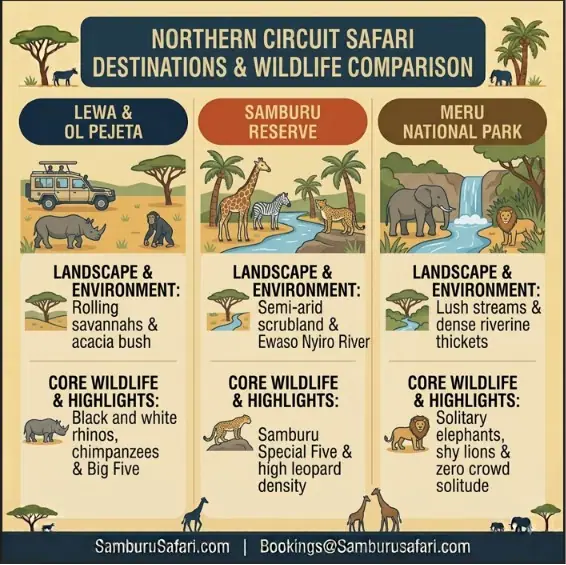
Three nights is about the ceiling for a single public reserve. The stronger route pairs the dry northern plains with a private sanctuary down near Mount Kenya.
Our signature itineraries run from the northern river tracks into Ol Pejeta, so you track desert species on days one and two and reach East Africa’s largest black rhino sanctuary on day three. The full range sits under our Samburu safari itineraries.
Prices are per person, two travellers sharing a private 4×4 Land Cruiser, 2027 dates.
Safari Style & Selected Properties | Journey Highlights & Logistics | Price Per Person | |
Budget Overland Tier<br>Samburu Riverside Camp • Comfort Gardens Ol Pejeta | 4 Days / 3 Nights overland • Full board & private 4×4 • Daily scheduled tracking | $1,480 USD | |
Mid-Range Overland Tier<br>Samburu Simba Lodge • Sweetwaters Tented Camp | 4 Days / 3 Nights classic road trip • Waterhole views on site • Extended field drives | $1,820 USD | |
Luxury Fly-In Tier<br>Elephant Bedroom Camp • Sanctuary Tambarare | 4 Days / 3 Nights premium air package • Roundtrip bush flights from Wilson • Riverfront cat tracking | $3,250 USD | |
Luxury Plus Sky Circuit<br>Sasaab Lodge • Ol Pejeta Bush Camp | 4 Days / 3 Nights luxury flight package • All bush flights & private airstrips • Open suites & night drives | $6,120 USD |
Gear notes compiled from testing on game drives across Samburu, Buffalo Springs and the surrounding conservancies, and checked against current practice with our driver-guides. Last updated: July 20, 2026.
Message us directly for custom itineraries and the latest seasonal offers.