
Five hours up the A2 from Nairobi, somewhere around the Ewaso Nyiro crossing at Archer’s Post, a guest almost always asks the same question: “Gerard, aren’t the Samburu just Maasai who live up north?”
Then you step out of the Land Cruiser. Brass camel bells. Neon pink beadwork instead of deep blue. Most international travelers arrive expecting two versions of the same red-blanketed tribe, and the assumption comes apart within the first hour. The shared Maa language is real, but almost everything built on top of it — herds, villages, initiation, who runs the cultural visits — went in a different direction three centuries ago. That divergence is the backbone of Samburu culture as visitors encounter it today.
Comparison Aspect | Samburu (Lokop) | Maasai |
Primary Region | Arid northern Kenya (Samburu, Isiolo, Laikipia) | Southern Kenya (Mara, Amboseli) & northern Tanzania |
Language Dialect | Northern Maa (Lkutuk) | Southern Maa dialects |
Primary Livestock | Camels (Kameye), zebu cattle, goats | Zebu cattle (Inkishu), sheep |
Beadwork Style | Wide, flat circular neon collars (Nnkami) | Layered drop-pendant blue/red necklaces |
Initiation Village | Unfenced horseshoe village (Lorora) | Fenced circular boma (Manyatta / Eunoto) |
Cultural Tourism | Independent, women-led cooperatives (Umoja) | Commercial, male-led village bomas |
The gap between Samburu Simba at $1,240 per person and Saruni Samburu at $2,690 comes down to two things: where the property sits, and what that location lets you do. Inside the main reserve you pay the $85 daily park entry and you move on gate hours — nothing before 6:00 AM. Up at Saruni in Kalama Conservancy, the fees go to community rangers and you can walk straight out into the bush for a night drive or a village visit whenever it suits.
Package Tier | Hotel / Camp Included | Transport & Setup | Total Rate Per Person | |
Budget Tier | Umoja Women’s Camp / Bandas | 3 Days private Land Cruiser & guide • Full board stay | $900 USD | |
Mid-Range Tier | Samburu Simba Lodge | 3 Days private Land Cruiser & guide • Full board lodge | $1,240 USD | |
Luxury Tier | Samburu Intrepids Camp | 3 Days private Land Cruiser & guide • Luxury river tent | $1,640 USD | |
Luxury Plus Tier | Saruni Samburu | 3 Days private Land Cruiser & guide • Cliffside villa | $2,690 USD |
Package Tier | Hotels & Lodges Included | Transport & Setup | Total Rate Per Person | |
Budget Tier | Samburu Camp (2N) + Sweetwaters Camp (1N) | 4 Days private Land Cruiser & guide • Camping & tented stay | $1,380 USD | |
Mid-Range Tier | Samburu Simba (2N) + Sweetwaters Serena (1N) | 4 Days private Land Cruiser & guide • Full board lodge stay | $1,890 USD | |
Luxury Tier | Elephant Bedroom (2N) + Ol Pejeta Bush Camp (1N) | 4 Days private Land Cruiser & guide • Luxury canvas circuit | $2,780 USD | |
Luxury Plus Tier | Saruni Samburu (2N) + Lewa Safari Camp (1N) | 4 Days private Land Cruiser & guide • High-end conservancies | $4,150 USD |
What your money covers: Full board at the named lodges or campsites, private 4×4 safari Land Cruiser with guide and fuel, daily park entry permits ($85 USD/day non-resident), AMREF Flying Doctors evacuation cover, and bottled drinking water.
What you pay out of pocket: International flights, Kenya e-visas, personal travel insurance, alcohol, driver-guide tips, and Reteti Elephant Sanctuary entrance fees.
Want a custom northern circuit? Send us your dates and we will build it around them.
Both groups descend from Nilotic pastoralists who moved south along the Nile Valley between the 15th and 17th centuries. The split came during the 18th-century Rift Valley expansion.
The Maasai pushed south into the high-rainfall grass plains of the Mara and Amboseli. The Samburu stayed put, north of the Ewaso Nyiro, in country that gets a fraction of that rain. Everything downstream of that decision — herd composition, village design, ceremonial calendar — is an adaptation to dry ground.
The Ewaso Nyiro and the granite bulk of Mount Ololokwe mark the edge of traditional Samburu territory.
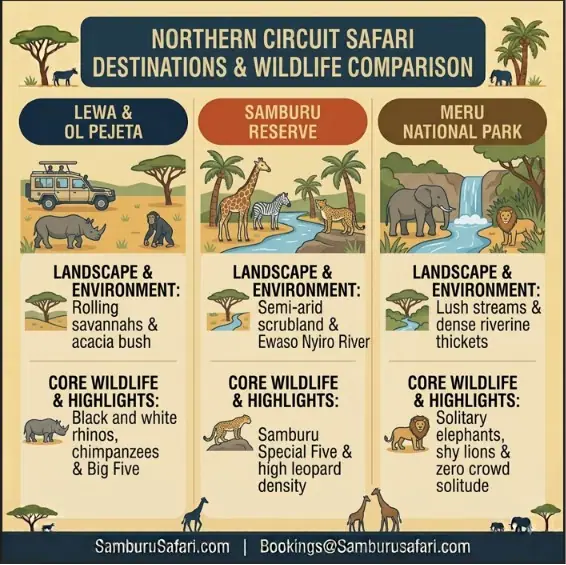
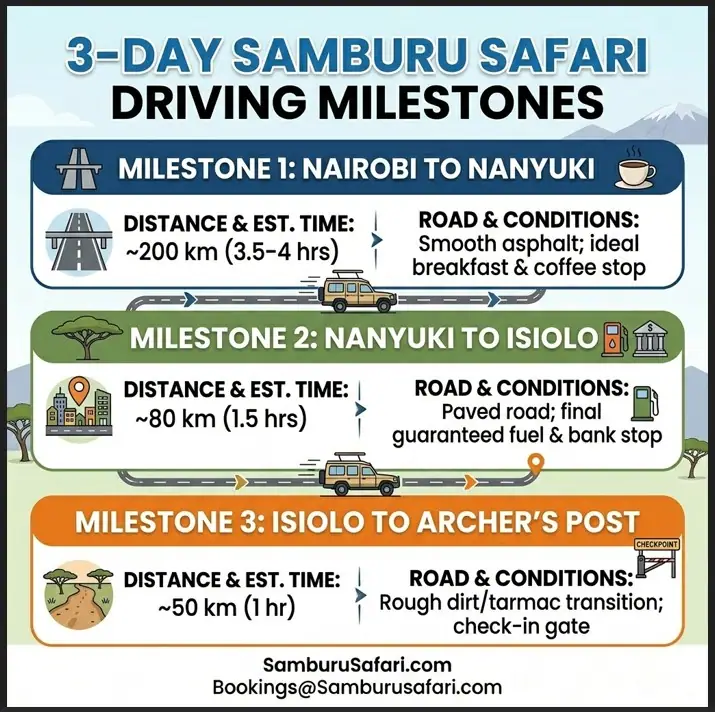
Transit reality. Samburu National Reserve is a 5-hour drive from Nairobi — 310 km on the paved A2 through Nanyuki and Isiolo. The Maasai Mara is roughly 6 hours and 270 km southwest via Narok, on a road that has historically been the rougher of the two.
Combining circuits. Doing both means a long transit, so most people break it at Ol Pejeta or Lewa on the Mount Kenya slopes rather than driving it straight through.
The Samburu call themselves Lokop, sometimes Loikop — owners of the land. “Samburu” is not their word at all. Early European travelers mangled samburr, the leather pouch Samburu women carry for dried meat and gifts, and the name stuck. Maasai speakers call their northern relatives Isampur.
Both groups speak Maa, but the Samburu speak Northern Maa, or Lkutuk: faster cadence, different pitch pattern, vocabulary the south does not use. A greeting that works in the Mara — sopa — comes back with a different tonal shape near Archer’s Post. Close enough to follow, far enough that speakers notice immediately.
Around the Mara, zebu cattle (Inkishu) graze open grass. Southern rainfall supports it, and cattle became the measure of Maasai wealth.
North of the river there is thorn-scrub and not much water. Samburu herds run on camels — Kameye, or Lnyang — alongside zebu, goats and sheep. Camels browse high acacia rather than graze, they keep producing milk deep into the dry months, and they walk between water points that would kill cattle. Wealth up here is counted differently because the land counts differently.
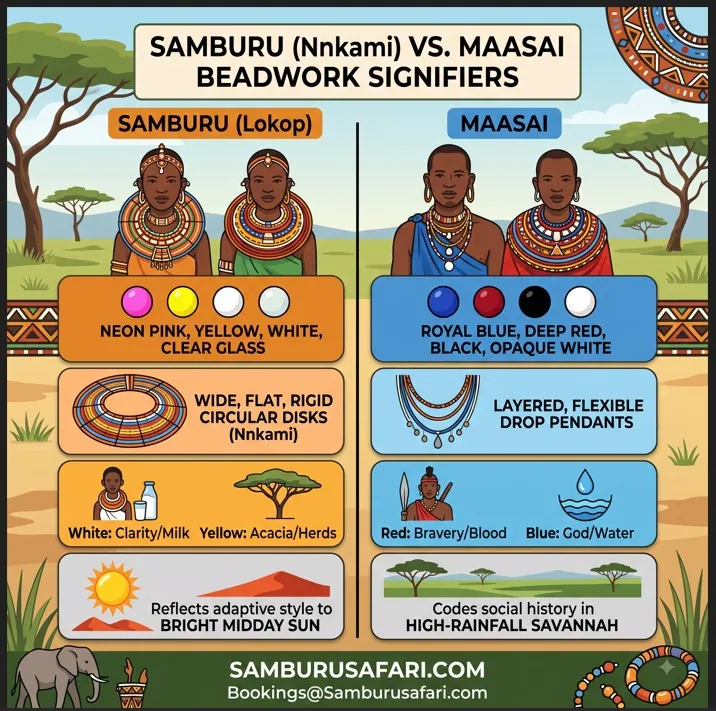
Midday sun near Archer’s Post glares off neon pink, yellow and clear glass. Samburu women wear Nnkami — wide, flat bead collars that sit as rigid disks around the neck, catching light from a long way off.
Southern Maasai work in deep royal blue, dark red, black and opaque white, arranged as layered drop pendants rather than flat plates. Both traditions encode age, marital status and clan, but they read as different objects at a glance, and samburu beadwork carries its own vocabulary of colour and rank.
This table adds detailed information gain not present in the article’s text, targeting users searching for the meaning behind specific artifacts encountered during a village visit.
Meaning of Samburu beadwork colors and collar styles
Samburu beadwork is not just decoration; it is a visual language that signifies the wearer’s age, clan, and social standing. When you “visit samburu village”, paying attention to the unique colors and structure of the Nnkami collars reveals details about the community hierarchy. This table provides a quick visual key to the symbolism that sets northern rangeland artistry apart from southern Maasai designs.
Visual Feature | Samburu Nnkami Meaning | Maasai Beadwork Meaning |
Dominant Colors | Neon pink, bright yellow, white, clear glass. | Royal blue, deep red, black, opaque white. |
Collar Structure | Wide, flat, rigid circular disks (Nnkami). | Layered, flexible drop pendants. |
Key Signifier (Color) | White signifies clarity/milk; Yellow signifies acacia/herds. | Red signifies bravery/blood; Blue signifies God/water. |
Artistic Vocabulary | Reflects adaptions to bright midday desert sun. | Codes social history in high-rainfall savannah. |
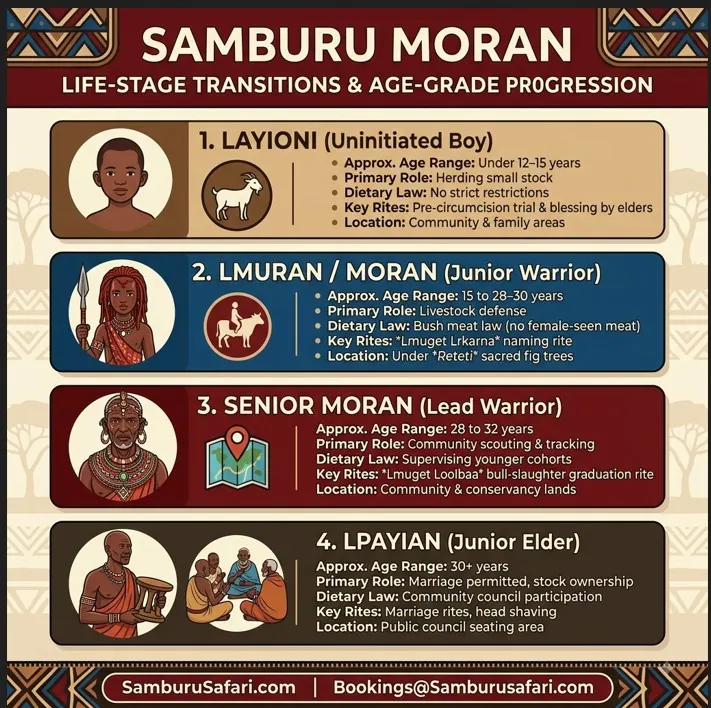
When Samburu boys are initiated into warriorhood (Lmuran), the clan builds a temporary horseshoe-shaped village called a Lorora. One Lorora can hold 80 to 100 families, and it stays open — no thorn perimeter.
Southern Maasai build their initiation villages, Manyatta or Eunoto bomas, as fenced circles around a central cattle kraal. Same purpose, opposite geometry. The full arc of samburu warriors moving through the age-set system explains why the northern version stays unfenced.
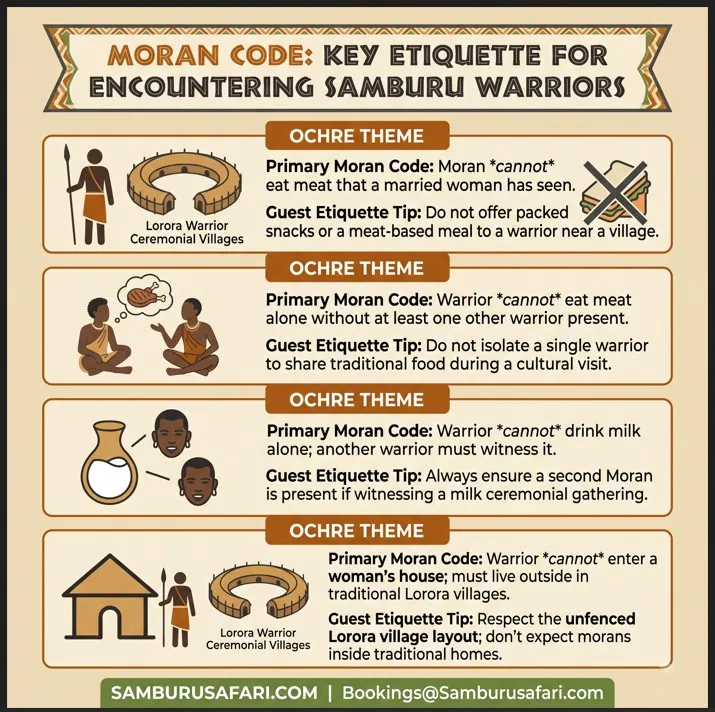
Samburu warriors follow dietary law called Nkirore. A Moran cannot eat meat that a married woman has seen, cannot eat inside a woman’s house, and cannot drink milk alone without another warrior present.
You see it play out. Young warriors will carry a butchered goat two miles out into a dry lagga to eat, because custom forbids them from eating meat anywhere a married woman might look. Southern Maasai kept similar restrictions historically; in the northern conservancies they are still enforced.
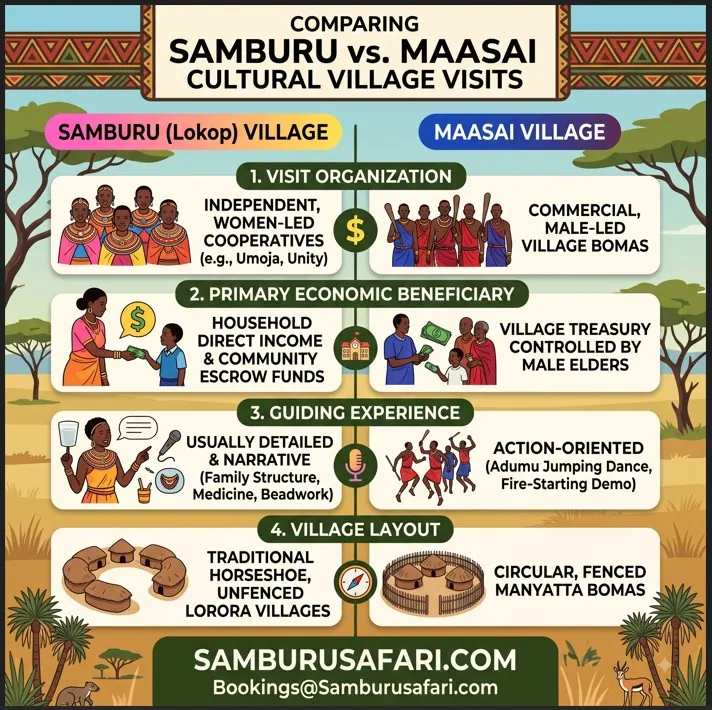
The way cultural visits are run is the clearest practical difference for travelers.
Samburu. Umoja Women’s Village near Archer’s Post was founded as a refuge for women, and it is still run by them. Income from beadwork and guided tours goes directly to the households, and nearby Unity Cultural Village works the same way. A cultural safari experience here tends to run long — family structure, bead-weaving, herbal medicine — because the women guiding you are showing their own homes.
Maasai. Visits near the Mara gates at Sekenani or Talek are usually male-led commercial bomas built around the adumu jumping dance, with a fixed entry fee and a fixed running order.
Neither is wrong. But one is a business at a gate, and the other is a village that happens to accept visitors.
Differences in visiting Samburu and Maasai cultural villages
The experience of visiting a cultural boma in Samburu is structured differently than near the Maasai Mara gates. Understanding the lead organizers and primary activities helps set expectations for your encounter. This comparison breaks down the key operational differences that travelers notice during their immersive tours of “visit samburu village”.
Visit Aspect | Samburu (Lokop) Village | Maasai Village |
Visit Organization | Independent, women-led cooperatives (e.g., Umoja, Unity). | Commercial, male-led village bomas. |
Primary Economic Beneficiary | Household direct income & community escrow funds. | Village treasury controlled by male elders. |
Guiding Experience | Usually detailed & narrative (family structure, medicine, beadwork). | Action-oriented (adumu jumping dance, fire-starting demo). |
Village Layout | Traditional horseshoe, unfencedLorora villages. | Circular, fencedManyatta bomas. |
Basic courtesy covers most of it.
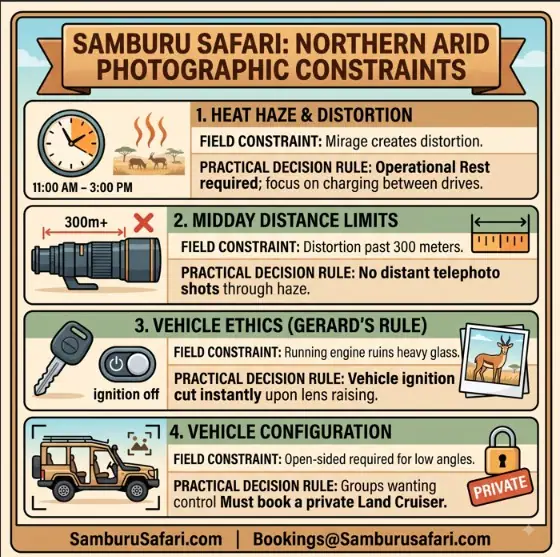
Ask before you photograph. Never raise a lens at an elder or a warrior without asking. Organized cultural villages are the place to shoot freely — photographing people respectfully is mostly a matter of where you are and whether you asked.
Expect desert, not savannah. Northern Kenya is semi-arid scrub. Dry riverbeds, volcanic hills, dust in everything. Travelers who picture Mara grassland are always briefly disappointed, then won over.
Pay properly for crafts. Buying beadwork direct from the cooperatives puts money into school fees and food, which is the whole argument for how tourism revenue reaches communities up here.
Road conditions, park fees, flight options and health precautions all shift with the season, and our planning a samburu safari section covers each of them before you commit to dates.
What are the dietary rules for Samburu Morans
The initiation into warriorhood (Lmuran) comes with strict cultural dietary laws (Nkirore) that Samburu Morans must still follow, particularly in the northern conservancies. When you “visit samburu village” or encounter warriors out on a safari game drive, being aware of these restrictions prevents you from causing unintentional offense. This field guide summarizes the main behavioral taboos that dictate how you interact respectfully with a Samburu warrior.
Etiquette Area | Primary Moran Restriction / Behavioral Code | Guest Etiquette Tip |
Eating Meat | Moran cannot eat meat inside a village boma or that a married woman has seen. | Do not offer packed snacks or a meat-based meal to a warrior near a village. |
Dietary Rules | Cannot eat meat alone without at least one other warrior present. | Do not isolate a single warrior to share traditional food during a cultural visit. |
Drinking Milk | Warrior cannot drink milk alone; another warrior must witness it. | Always ensure a second Moran is present if witnessing a milk ceremonial gathering. |
Behavioral Code | Cannot enter a woman’s house; must live outside inLorora villages. | Respect the unfencedlorora village layout; don’t expect morans inside traditional homes. |
Are Samburu and Maasai the same tribe? No. They share Nilotic roots and speak dialects of the same language, but the Samburu (Lokop) and Maasai are distinct groups with different territory, beadwork, herds and social structures.
Do Samburu people speak the same language as Maasai? They speak related dialects of Maa. Samburu speak Northern Maa (Lkutuk), which has a faster cadence and vocabulary that southern speakers do not use.
Why do Samburu keep camels while Maasai keep cattle? Northern Kenya is far drier. Camels browse dry acacia scrub and keep milking through drought, which makes them the practical animal north of the Ewaso Nyiro.
Written by Gerard Murero — TRA silver-level guide working the northern rangelands routes through Samburu, Buffalo Springs and the conservancies.
Reviewed by Benson Kungu — safari guide and photography specialist.
Message us directly for custom itineraries and the latest seasonal offers.