
Summary: While malaria in samburu is classified as a low-to-moderate risk due to the arid climate, prevention remains essential. Risk is highest near riverbanks and human transit towns like Isiolo, while elevated ridge conservancies have minimal activity. Travelers should consult a travel clinic regarding prophylaxis (Malarone is widely preferred over Doxycycline due to intense sun exposure), apply DEET repellent over sunscreen, and wear permethrin-treated socks for evening game drives.
Medical Disclaimer: This article is for informational and field guidance purposes only and does not substitute for professional medical advice. Always consult a qualified travel physician or clinic before starting any antimalarial regimen.
When travelers plan a journey to the northern frontier, one of their first questions is whether malaria in samburu poses a serious threat. Sitting in an open vehicle at dusk, listening to the Ewaso Nyiro River while the smell of damp river silt mixes with acacia wood smoke, you might wonder if every passing insect carries a risk.
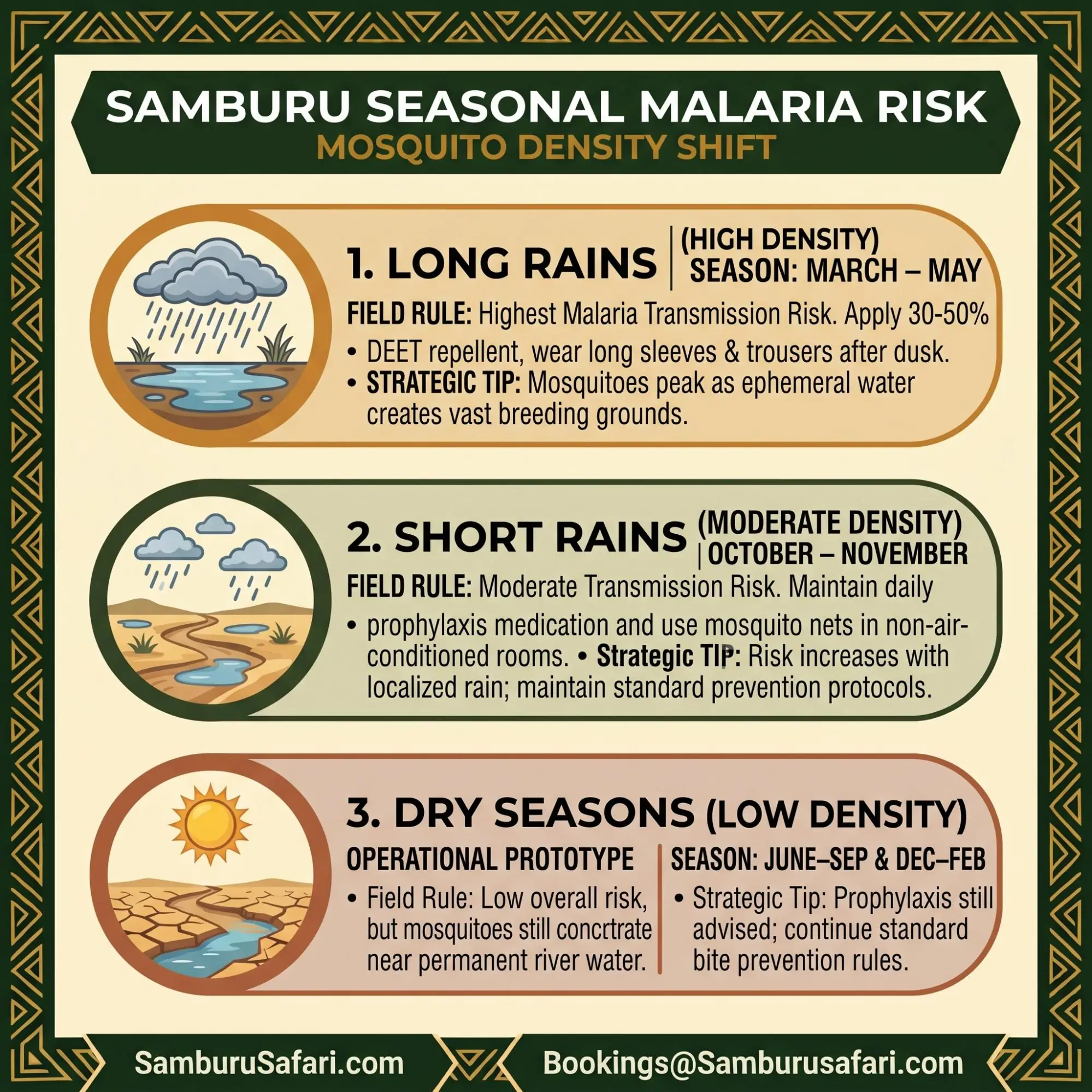
Samburu is a low-to-moderate risk area compared to humid coastal regions or Lake Victoria lowlands. Northern Kenya is hot and semi-arid. Mosquitoes need standing water, so during peak dry months from July to September and January to February, mosquito numbers drop significantly.
However, low risk does not mean zero risk. Partner lodges maintain strict pest control schedules, supply treated nets, and offer turn-down spray services. On game drives, professional driver-guides carry first-aid kits and keep direct contacts with regional medical centers so you can explore with confidence.
Mosquito breeding in the Samburu ecosystem directly tracks seasonal rainfall along the Ewaso Nyiro river basin. During peak dry months, dried-up riverbeds keep mosquito populations extremely low across the reserves. Knowing these seasonal risk shifts helps you prepare appropriate clothing and repellent protection for your trip dates.
Season & Months | Mosquito & Risk Level | Recommended Protection Level |
Peak Dry (Jul–Sep, Jan–Feb) | Low Risk (Arid / dry lagas) | Prophylaxis + evening repellent on ankles/arms. |
Long Rains (Apr–May) | Moderate Risk (Temporary pools) | Maximum precautions: DEET, nets, long clothing. |
Short Rains (Nov–Dec) | Low to Moderate Risk | Daily repellent application + zipped tent mesh. |
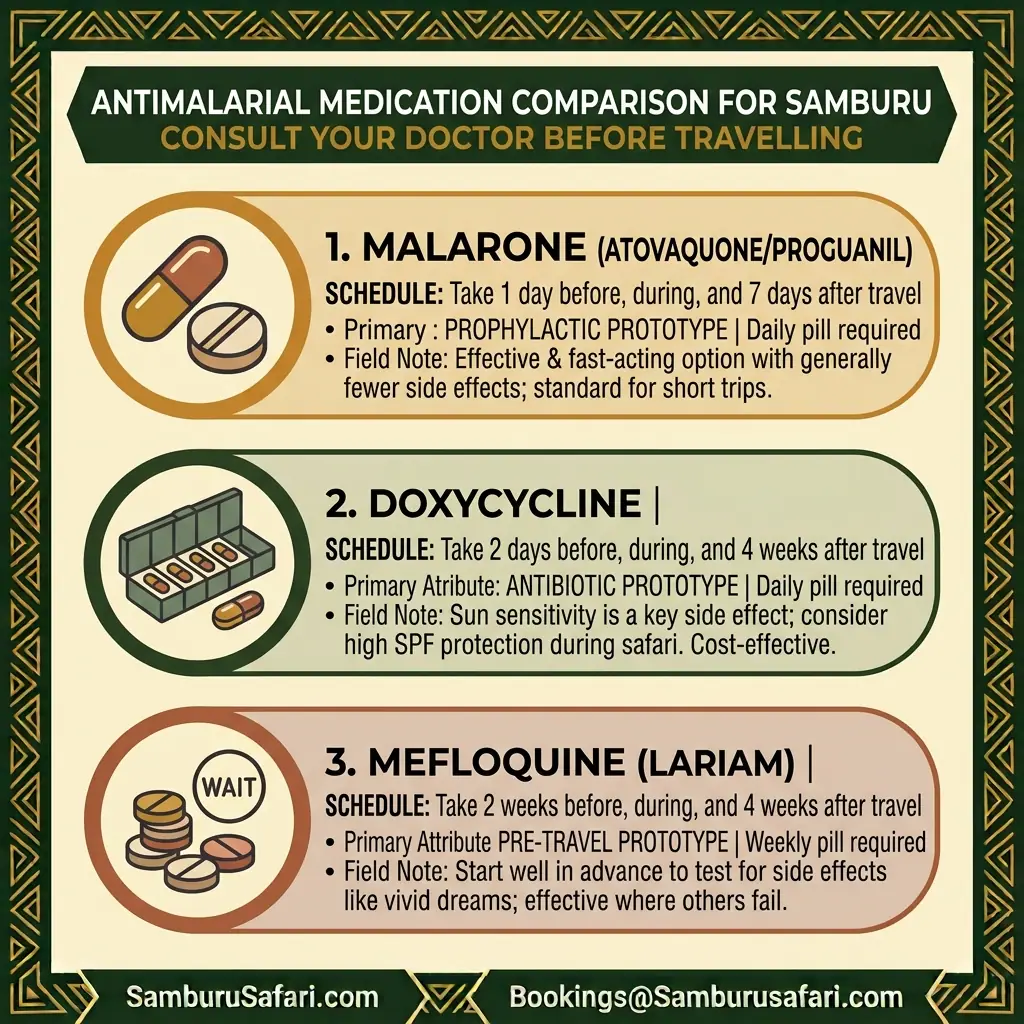
Discuss antimalarial options with a travel clinic prior to departure. Different medications behave very differently under the equatorial sun.
You can review official medical guidelines on the CDC Yellow Book Kenya Malaria Guidance or check global health facts through the WHO Malaria Guidelines.
Feature / Detail | Malarone (Atovaquone-Proguanil) | Doxycycline | Lariam (Mefloquine) |
Start Taking | 1–2 days before safari | 1–2 days before safari | 2–3 weeks before safari |
Dosing Schedule | Daily with food | Daily with food | Weekly |
Post-Trip Duration | Stop 7 days after leaving | Stop 4 weeks after leaving | Stop 4 weeks after leaving |
Primary Sun Sensitivity | Extremely Low | High (Equatorial Rash Risk) | Very Low |
Best Suited For | Short-term northern safaris | Budget travelers (in shade) | Long-term stays / ex-pats |
Doxycycline is often prescribed because it is inexpensive, but it carries a severe side effect in northern Kenya: intense photosensitivity. Under an equatorial UV index that routinely hits 11+, Doxycycline makes skin burn almost instantly.
On open tracking runs past Mount Ololokwe, travelers on Doxycycline frequently develop painful solar dermatitis within 20 to 30 minutes, even through light vehicle canopy shade or mild cloud cover. Severe blistering on exposed forearms and necks can ruin an entire trip.
For northern itineraries, Malarone is overwhelmingly preferred. It rarely causes sun sensitivity and has fewer reported side effects for short safari stays.
Selecting the correct antimalarial medication is critical for a smooth northern Kenya safari. While Samburu’s semi-arid environment carries a lower malaria risk than humid coastal zones, preventative prophylaxis remains strongly recommended for all international travelers. This comparison outlines how the primary CDC/WHO-recommended options compare on dosing, sun risks, and safari compatibility.
Antimalarial Medication | Dosing Schedule | Key Pros & Cons |
Malarone (Atovaquone-Proguanil) | Daily (1–2 days pre-trip to 7 days post) | Highly tolerated; low sun sensitivity; higher cost. |
Doxycycline | Daily (1–2 days pre-trip to 4 weeks post) | Budget-friendly; severe sun sensitivity risk. |
Lariam (Mefloquine) | Weekly (2–3 weeks pre-trip to 4 weeks post) | Convenient weekly dose; potential vivid dreams/dizziness. |
Geography, Lodge Elevation & Local Micro-Climates
Mosquito activity up north is hyper-localized. Understanding where you stay helps you gauge what precautions to take each evening.
Properties sitting on the Ewaso Nyiro River—like Elephant Bedroom Camp or Samburu Intrepids—see localized evening mosquito activity around riverbed pools where tall trees trap humidity at sunset.
In contrast, high-altitude ridge lodges in nearby private conservancies—such as Sasaab or Saruni inside Kalama Conservancy—sit on elevated basalt cliffs. Constant dry thermal breezes blow across these high ridges, making mosquitoes almost non-existent around open-air lounge decks. You can compare different lodge layouts in our guide to luxury lodges in Samburu.
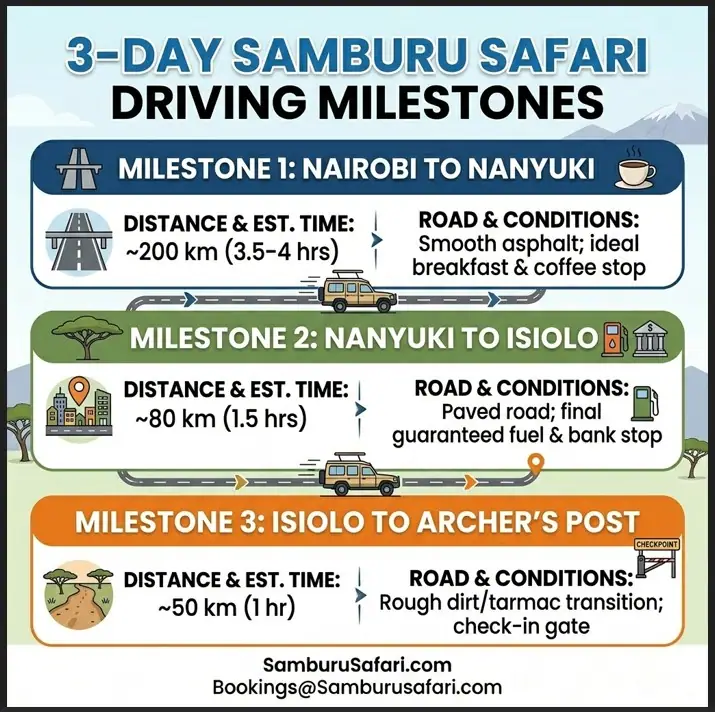
Surprisingly, the highest actual transmission risk on a northern trip does not occur deep inside the wilderness reserve. It happens in human transit towns like Isiolo and Archer’s Post. Stagnant rainwater puddles around buildings combined with higher human population density mean local mosquitoes carry a much higher parasite load. If you stop for fuel or roadside meals in town while driving from nairobi to samburu, roll up your windows and apply insect repellent before stepping out.
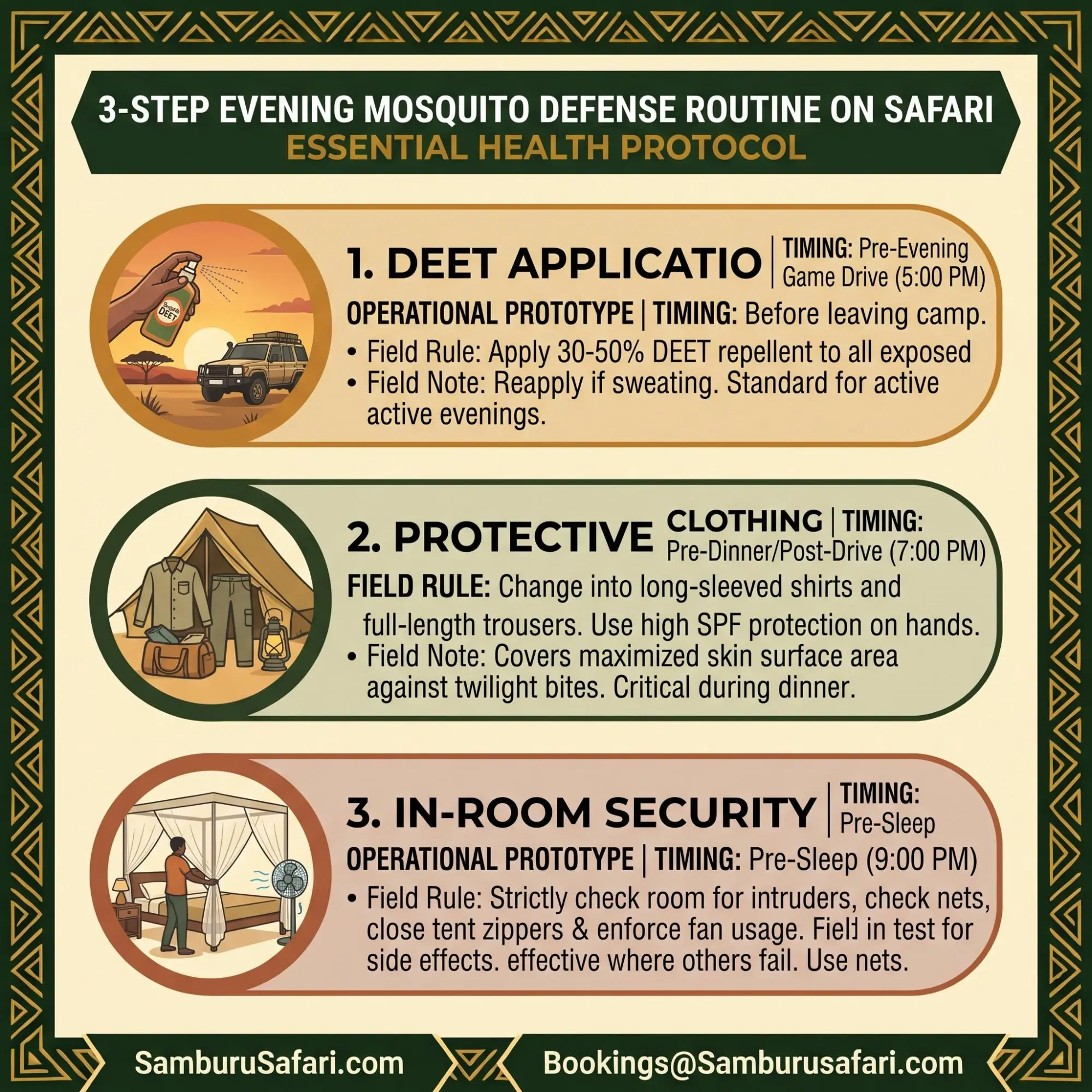
Simple, consistent habits go a long way in keeping you bite-free in the bush:
The Anopheles mosquitoes responsible for transmitting malaria feed primarily between dusk and dawn when temperatures cool down. Combining oral medication with a consistent daily barrier routine drastically reduces bite attempts during evening game drives and outdoor lodge dining. Following this 3-step evening defense routine ensures complete field protection throughout your safari.
Defense Step | Recommended Application | Why It Matters |
1. Layer Sunscreen & DEET | Apply SPF 50+ first; wait 15 min, then 30%+ DEET | Prevents DEET from breaking down under heat. |
2. Treated Evening Wear | Wear neutral long clothing + permethrin socks | Blocks bites on ankles where low mosquitoes fly. |
3. Tent Mesh Security | Lock tent zippers tightly with carabiners | Keeps night mosquitoes out after turn-down spray. |
Certain traveler groups require extra caution when planning a trip to a malaria-risk region:
Understanding what happens after returning home is just as crucial as taking precautions in the bush:
If you develop a fever or flu-like symptoms during or after your trip, seek medical evaluation immediately, as malaria is easily treated when caught early.
While small lodge dispensaries carry basic supplies, the top regional medical center for tropical diagnostics is Wamba Catholic Mission Hospital, located in nearby Wamba town at the foot of the Matthews Range. Their laboratory specializes in tropical infectious diseases and performs rapid Giemsa-stained blood smears for Plasmodium falciparum, offering fast, accurate testing.
All signature safari packages arranged through Samburusafari.com automatically include emergency evacuation insurance through AMREF Flying Doctors. If a guest falls seriously ill in the bush, AMREF dispatches a medical aircraft to local airstrips—like Oryx or Buffalo Springs—to fly you directly to Nairobi’s top private hospitals within hours. You can review how air logistics connect with wilderness strips in our guide on flights from nairobi to samburu.
Once medical precautions are locked in with a travel clinic, planning a northern itinerary becomes straightforward…
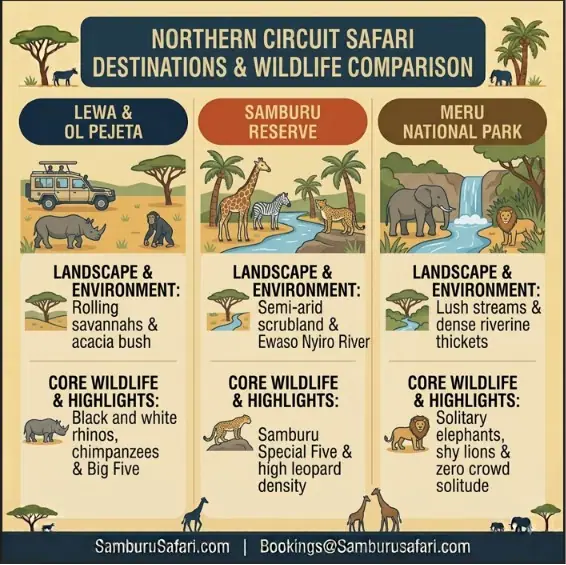
Limiting your stay inside the public reserve to two or three nights before connecting to a private highland conservancy provides a well-balanced itinerary. Pairing the arid river loops of Samburu with the cool rhino sanctuaries of Ol Pejeta Conservancy gives you a dramatic contrast—tracking rare northern species along the Ewaso Nyiro River on day one, and exploring black rhino habitats in the cool highlands on day three.
Look through our full collection of routes across our Samburu safari packages.
The table below outlines primary multi-destination itineraries for 2027 travel dates, based on two people sharing a private 4×4 Safari Land Cruiser.
Safari Style & Selected Properties | Journey Highlights & Logistics | Price Per Person |
Budget Overland Tier
• Samburu Riverside Camp
• Comfort Gardens Ol Pejeta | • 4 Days / 3 Nights road trip overland
• Full board meals & private 4×4 cruiser
• Daily scheduled game tracking | $1,480 USD
👉 Book This Safari{target=”_blank”} |
Mid-Range Overland Tier
• Samburu Simba Lodge
• Sweetwaters Tented Camp | • 4 Days / 3 Nights classic circuit
• Waterhole views on site
• Extended cruiser tracking runs | $1,820 USD
👉 Book This Safari{target=”_blank”} |
Luxury Fly-In Tier
• Elephant Bedroom Camp
• Sanctuary Tambarare | • 4 Days / 3 Nights luxury air package
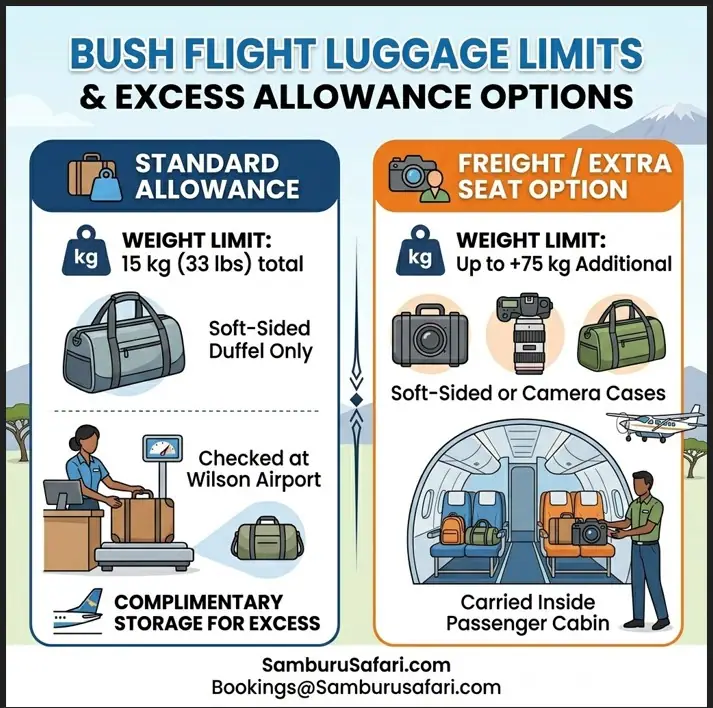
• Roundtrip bush flights from Wilson
• Prime riverfront cat tracking | $3,250 USD
👉 Book This Safari{target=”_blank”} |
Luxury Plus Sky Circuit
• Sasaab Lodge
• Ol Pejeta Bush Camp | • 4 Days / 3 Nights luxury flight package
• All bush flights & private airstrips included
• Open suites & night tracking | $6,120 USD
👉 Book This Safari{target=”_blank”} |
Kenya requires a Yellow Fever vaccination certificate if you arrive from or transit through a Yellow Fever endemic country. While malaria is prevented with daily or weekly oral pills, Yellow Fever is prevented with a single lifetime vaccine shot given at least 10 days before travel.
Yes, mosquito numbers rise during the short rains in November and the long rains in April and May. Standing rainwater pools in dry clay depressions create temporary breeding grounds, making strict prophylaxis and insect repellent essential during these green months.
Yes, pediatric formulations of Malarone (Malarone Paediatric) are widely available and safe for children weighing over 11 kg (24 lbs). Always consult your family pediatrician before traveling to select the correct dosage for your child.
Message us directly for custom itineraries and the latest seasonal offers.