
Climb the winding stone track up Kitis Mountain into Kalama and the 38°C heat of the Ewaso Nyiro valley falls away behind you. Saruni sits roughly 1,000 metres up on the granite ridges, and the constant cool breeze makes you forget entirely how brutal the valley floor gets by noon.
When travellers ask us about Kalama Conservancy, we point at three things: private wilderness solitude, night game drives, and rock-dwelling wildlife you will not see anywhere else in the ecosystem.
Written by Patrick Mulei. Reviewed by Anthony Mule.
These quotes cover two adults travelling together. Every rate includes Saruni Samburu full board, private or stationed 4×4 Land Cruiser transit with guide and fuel, Kalama conservancy fees, Samburu Reserve permits, and AMREF emergency evacuation cover.
Package Setup | Transport & Details | Best Suited For | Rate Per Person |
2N Overland 4×4 Safari — Saruni Samburu (Kalama) | 3 days private 4×4 & guide • Full board stay and conservancy fees | Road travellers wanting private wilderness luxury | $3,200 — Get a quote |
2N Luxury Sky Fly-In — Saruni Samburu (Kalama) | Return flights Wilson → Kalama • Stationed 4×4 game drives | Limited time, 15-minute airstrip transfers | $3,760 — Check dates |
Package Setup | Transport & Details | Best Suited For | Rate Per Person |
3N Overland Northern Circuit — Saruni Samburu (2N) + Ol Pejeta Bush Camp (1N) | 4 days private 4×4 & guide • Kalama and Ol Pejeta entry fees | Multi-conservancy tracking across Laikipia and Samburu | $4,340 — Price this trip |
3N Luxury Sky Circuit — Saruni Samburu (2N) + Saruni Rhino (1N) | All internal bush flights • Private transfers and rhino tracking permits | Villa luxury plus black rhino tracking on foot in Sera | $5,200 — Build my itinerary |
Inclusions: Full board at the named lodges, private or stationed 4×4 with guide and fuel, Kalama conservancy fees, Samburu Reserve daily permits, AMREF Flying Doctors evacuation cover, and scheduled regional bush flights on fly-in options.
Exclusions: International flights, Kenya e-visas, personal travel insurance, premium cellar wines, driver-guide tips, and Reteti Elephant Sanctuary entrance fees.
The Ol Pejeta pairing above is covered in full on our Samburu and Ol Pejeta combo page.
Kalama Community Conservancy covers 95,000 acres of semi-arid wilderness, established from the Gir Gir Group Ranch in 2002.
Exclusivity is what sets it apart. Saruni Samburu is the only commercial lodge operating across the entire 95,000 acres. Where central Samburu draws vehicle crowds at a cat sighting, guests here get private drives over open savannah and granite ridge.
The lodge sits high on the boulders of Kitis Mountain, catching the constant mountain breeze — natural relief from the valley heat below.
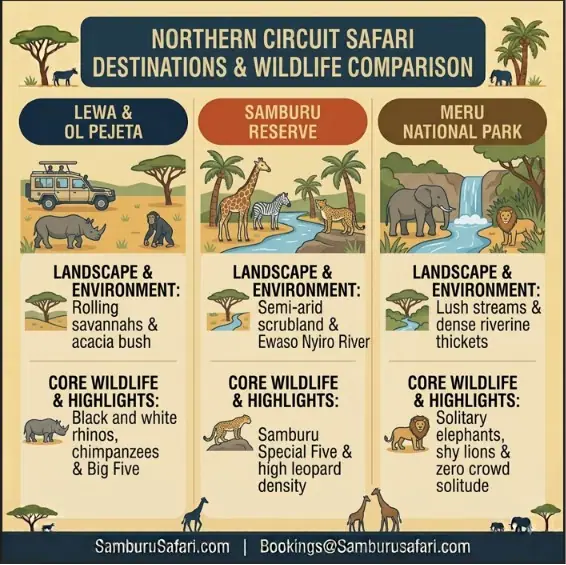
Game drives in the public reserve focus on the riverbank. Kalama’s mix of granite kopjes, open plains, and acacia thorn-scrub suits the northern endemics differently.
If it is your first time up north, our Samburu Special 5 guide covers what to watch for:
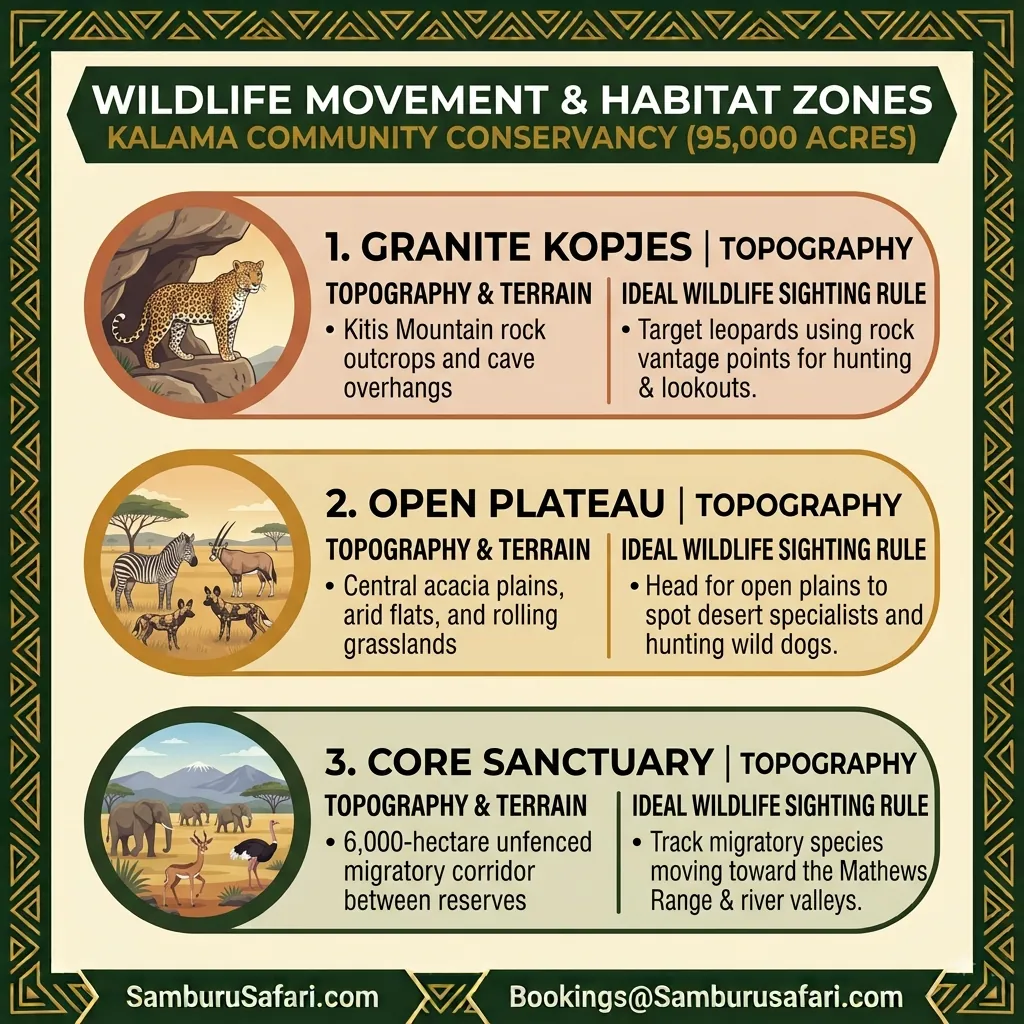
Predator dynamics here are their own thing. The granite kopjes of Kitis Mountain hold a high density of resident leopards using the rock overhangs as lookouts — a different hunting pattern entirely to the riverine big cats of Samburu. Endangered African wild dog packs also cross Kalama’s open valleys moving between the northern conservancies.
Wildlife behavior in Kalama Conservancy is heavily dictated by its dramatic topographies, ranging from granite kopjes to open acacia plateaus. Unlike the river-centric habitats of central Samburu, Kalama’s 95,000 acres allow northern specialist species and predators to move along dedicated wildlife corridors. The 6,000-hectare livestock-free core sanctuary provides safe refuge for migratory species moving toward the Mathews Range. Use the habitat matrix below to target specific species across the conservancy.
Habitat Zone | Topography & Terrain | Key Wildlife Species |
Granite Kopjes | Kitis Mountain rock overhangs | High density of resident leopards |
Open Plateau | Central acacia plains & flats | Grevy’s zebra, Beisa oryx & wild dogs |
Core Sanctuary Zone | 6,000-hectare unfenced corridor | Migratory elephant herds & ostriches |
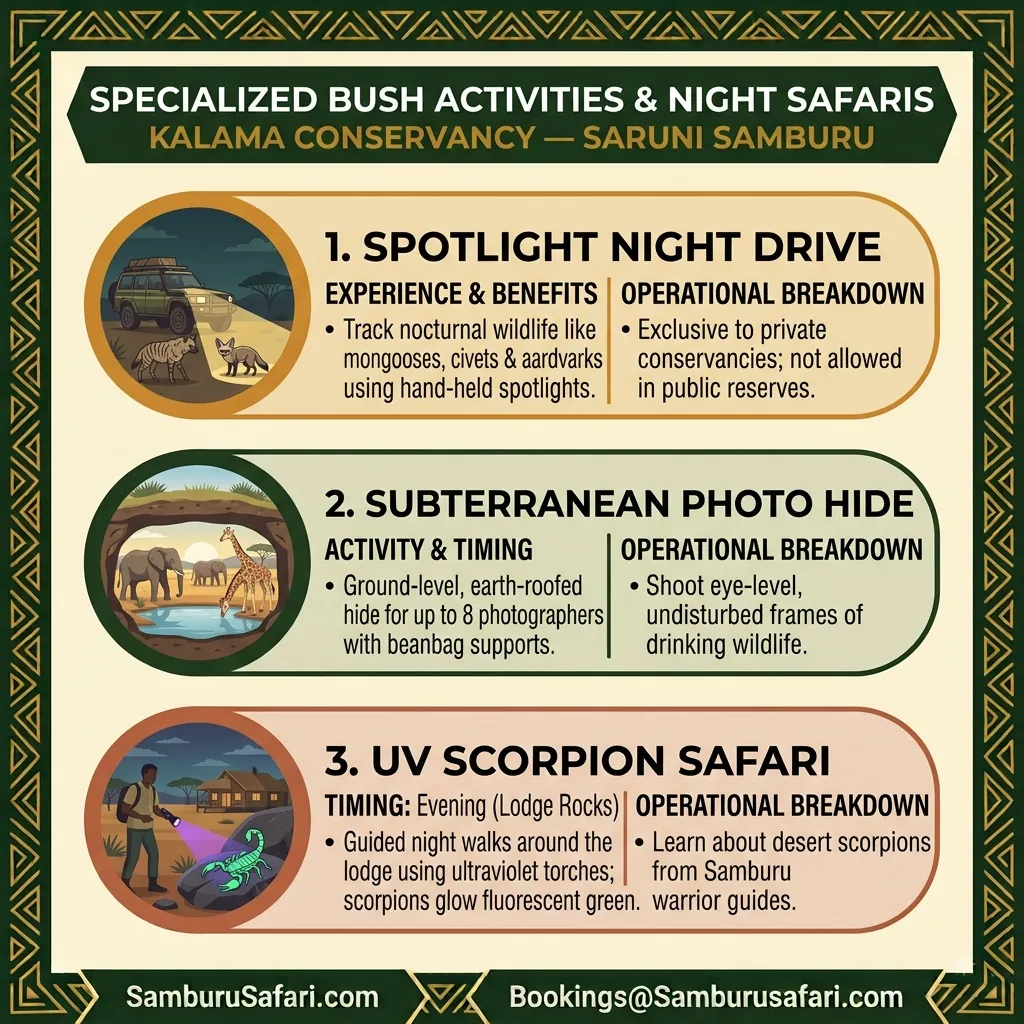
Once the sun drops behind the Mathews Range, the public reserve requires every vehicle back in camp by 6:30 PM. Kalama is different. As a private community conservancy, we head out after dark with hand-held spotlights.
That is when the bush changes entirely. Driven by local Samburu trackers, night game drives regularly turn up species you would almost never see by day — striped hyenas, bat-eared foxes, white-tailed mongooses, civets, bushbabies, and the occasional aardvark working the dry laggas.
The conservancy protects a 6,000-hectare core sanctuary zone where livestock grazing is banned year-round. That core works as a corridor letting elephants and big cats move between Samburu, Buffalo Springs, and the northern conservancies without hitting a fence line.
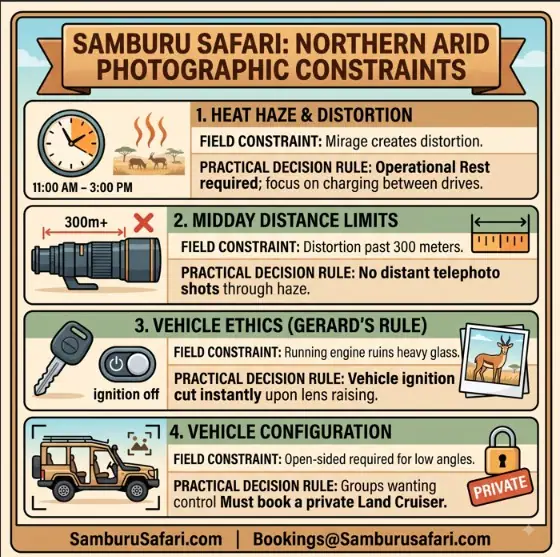
Beside a busy waterhole near the base of the mountain, Kalama has a subterranean photographic hide. Earth-roofed and buried on three sides, it takes up to eight photographers with beanbag lens supports.
Sitting at ground level inside the cool bunker, you shoot eye-level frames of elephant herds, giraffes, and zebras drinking a few feet away without disturbing anything. It is the centrepiece of our photographic safari packages in the north.
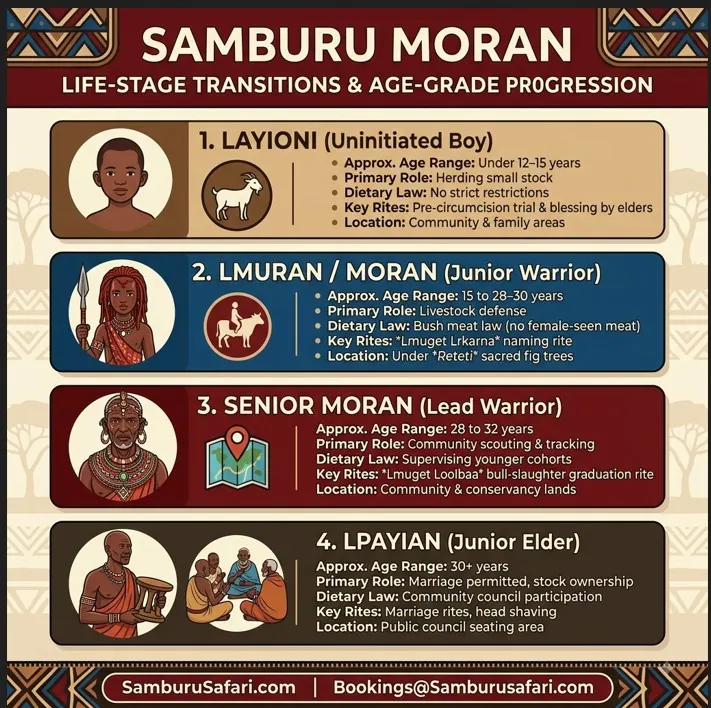
Kalama’s granite terrain supports bush walks led by Samburu warrior guides:
These are short guided walks around the lodge rather than full armed-ranger foot safaris, which run as a separate activity in the wider conservancy.
Kalama Conservancy offers exclusive bush experiences beyond standard daytime game drives that are strictly unavailable inside the adjacent public reserves. Guided by local Samburu warriors, guests can explore the granite environment through nocturnal spotlighting, subterranean photography, and heritage walks. These activities leverage Kalama’s private conservancy status and unique rocky terrain. Use the operational breakdown below to plan your daily and evening activity schedule at Saruni Samburu.
Specialized Activity | Timing & Location | Key Wildlife / Experience |
Spotlight Night Drive | After 6:30 PM (Core Sanctuary) | Striped hyenas, bat-eared foxes & civets |
Subterranean Photo Hide | All day (Mountain Waterhole) | Eye-level photos of elephants & giraffes |
UV Scorpion Safari | After dinner (Lodge Granite Rocks) | Desert scorpions glowing under UV light |
Kalama works as a migratory corridor connecting Samburu National Reserve to Sera, Namunyak, and the Mathews Range to the north.
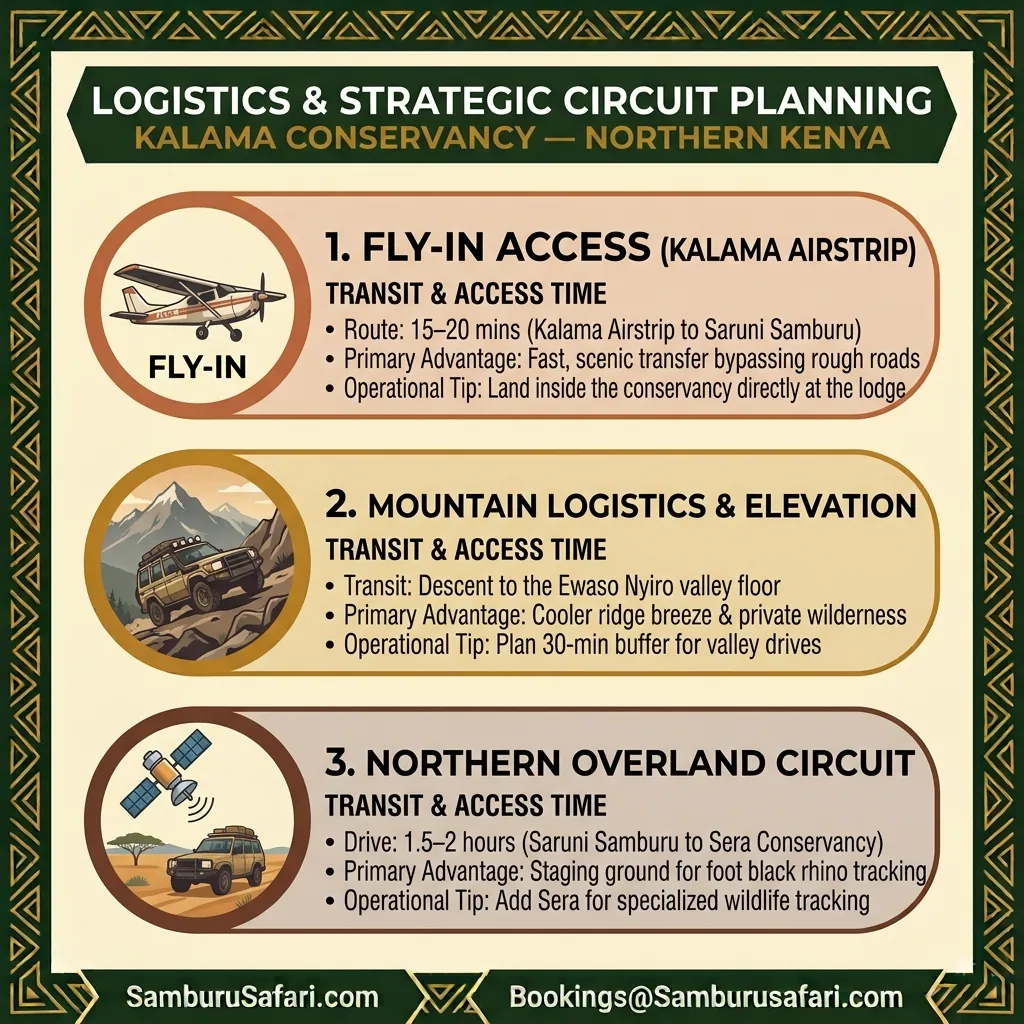
Planning a trip to Kalama Conservancy involves balancing local airstrip access, lodge mountain elevation, and multi-reserve game drive logistics. Flying directly into Kalama Airstrip eliminates long, dusty road transfers, while the conservancy’s location serves as an ideal staging point for northern circuit extensions. Reaching the river loops of Samburu Reserve requires a brief descent from the mountain ridge. Review the travel logistics below to optimize your transfer routes and itinerary connections.
Strategic Route / Hub | Transit & Access Time | Primary Operational Advantage |
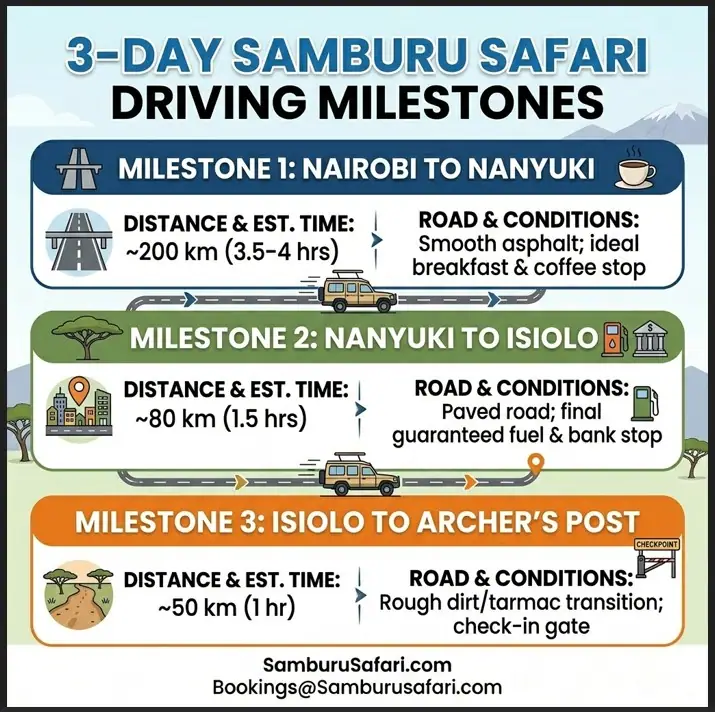
Kalama Airstrip | 15–20 mins to Saruni Samburu | Bypasses rough Buffalo Springs roads |
Archer’s Post Gate | 20–30 mins from southern gate | Fast access to Samburu NR river loops |
Sera Conservancy | 1.5 hours north via 4×4 | Staging ground for foot rhino tracking |
Our 3-night sky circuit pairs Saruni Samburu with Saruni Rhino in neighbouring Sera Conservancy, with Kalama as the staging ground.
Sera sits about 1.5 hours north and holds East Africa’s first community-operated black rhino sanctuary. Guests join trained Samburu rangers on foot to track wild black rhino using telemetry. Kalama’s elevated luxury plus Sera’s raw foot tracking is about as complete as a northern safari gets.
The full month-by-month breakdown is in our best time to visit Samburu guide.
Feature | Kalama Community Conservancy | Central Samburu Reserve |
Lodge Density | One lodge across 95,000 acres | Multiple lodges and public campsites |
Night Drives | Permitted with spotlight trackers | Prohibited after the evening curfew |
Special Activities | Subterranean photo hide, UV scorpion walks, rock art | Standard river loop game drives |
Microclimate | Cool mountain ridge breeze, around 1,000m | Hot river valley floor, up to 38°C |
For a full three-way comparison including Shaba, see our guide to Samburu vs Buffalo Springs vs Shaba.
Steep rock walkways. Because Saruni is built into the granite cliffside, moving between villas, dining decks, and pools means climbing steep stone steps. Not suitable for travellers with significant mobility limitations.
Distance to the river loops. Reaching the main Ewaso Nyiro circuits inside central Samburu means a 30-minute drive down the mountain track.
The wind. Those breezes keep the villas cool by day, but the ridge gets genuinely gusty at night. Light sleepers should bring earplugs — the canvas roofs snap in the wind.
Pack light rather than heavy: our Samburu safari packing list covers what actually earns its place in a 15kg bag up here.
Browse the full range of routes across our Samburu safari packages.
In northern Kenya, directly bordering the northern boundary of Samburu National Reserve near Archer’s Post.
Yes. Unlike the public reserve where drives end at the evening curfew, Kalama permits spotlight night drives to track nocturnal wildlife.
A 15 to 20-minute 4×4 drive up to the lodge.
Conservancy access, activities, and transfer times checked on the ground by our guides. Last updated July 2026.
Message us directly for custom itineraries and the latest seasonal offers.